Anime 2013 Q1 & Q2

•2013/02/18 • 5 Comments

New anime

Aku no Hana

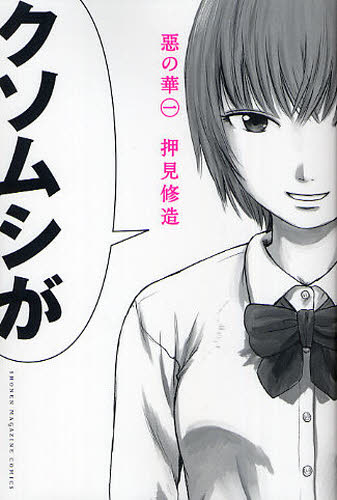
Aku_no_hana_volume_1_coverThe Flowers of Evil (惡の華 Aku no Hana) is a manga series written and illustrated by Shūzō Oshimi. It was serialized since September 9, 2009, in Kodansha’s Bessatsu Shōnen Magazine. An anime adaptation of the series is being developed by Zexcs and aired on April 5, 2013 with a scheduled 13 episodes.

Ending Theme:

“~花~ A Last Flower” by Asa-Chang

Bookworm Kasuga Takao’s favorite book is Charles Baudelaire’s Les fleurs du mal (of which the series is named after). The story begins with Takao receiving an F on his math test. His day quickly turns from bad to worse when in a moment of weakness, he steals the gym clothes of his crush and classmate Saeki Nanako. Unfortunately for him, Nakamura Sawa, a sadistic girl with a chip on her shoulder, catches him red-handed and proceeds to blackmail him into a “contract.” Should he try to win over the girl of his dreams while confessing his misdeed or continue acting as a BFF to a sadist?

Amnesia

Amnesia Amnesia (アムネシア Amuneshia) is a romance, adventure, shojou visual novel (an interactive fiction game) series by Idea Factory. It debuted on August 2011 for PlayStation, with two follow-up sequels titled “Amnesia Later” released on March 2012 and “Amnesia Crowd” scheduled to be released in 2013.

The anime series produced by Brain Base aired January 7, 2013 with a scheduled 13 episodes.

Opening & Ending Themes

1. “Zoetrope” by Nagi Yanagi
2. “Recall” by Ray

A girl loses here memories and is aided in her quest to regain her memories with the help of her “boyfriend” Shin, a spirit named Orion who is only seen and heard by the protagonist and a childhood friend Toma.

Hakkenden: Toho Hakken Ibun

HakkendenHakkenden: Eight Dogs of the East (八犬伝 ―東方八犬異聞― Hakkenden: Tōhō Hakken Ibun) is a supernatural, historical manga series by Miyuki Abe. The anime adaptation produced by Studio Deen premiered on January 5, 2013. The series streams on Crunchyroll.

Opening & Ending Themes:

1. “God FATE” by Faylan
2. “String of pain” by Tetsuya Kakihara

Five years ago, the village of Ootsuka was hit with a plague that killed everyone…but two boys and a girl: Sino Inuzaka, Sosuke Inukawa and Hamaji. Now, the three children live in isolation in a church deep inside a dangerous forest, hidden from those trying to seek them out.

The Imperial Church sets out to look for Murasame, the demon blade of life – the one that Shino, one of the survivors, wields.

Karneval

Karneval_Cover_Image_Volume_1Karneval (カーニヴァル), romanized as K∀RNEVAL, is a fantasy manga series by Touya Mikanagi, originally serialized in early 2008. There are currently nine volumes released in Japan and is ongoing. The anime adaptation aired on April 3, 2013 and licensed for streaming by Funimation.

Opening & Ending Themes:

1. “Henai no Rondo” (偏愛の輪舞曲) by GRANRODEO
2. “REASON” by KAmiYU.

Two unlikely tweeners, naive Nai and pickpocket Gareki, meet after they are set up and become wanted criminals by military security operatives.

Just when they are at the end of their roads, they encounter Circus, a powerful defense organization for the country.

Kotoura-san

KotourapromoKotoura-san (琴浦さん) is a romantic comedy manga series written by Enokizu. The series began serialization in Micro Magazine’s Manga Goccha magazine from October 14, 2010. A television anime adaptation by AIC Classic began airing on January 11, 2013 with a scheduled 12 episodes. This series is also simulcasted by Crunchyroll.

Opening theme:

1. “You Want To Hear the Story Behind the Backstory, Right?” (そんなこと裏のまた裏話でしょ? Sonna Koto Ura no Mata Urabanashi desho?) by Megumi Nakajima

Ending themes

1. “Flower of Hope” (希望の花 Kibō no Hana) by Haruka Chisuga (ep 1-4)
2. “The ESP Club’s Theme” (ESP研のテーマ Īesupī Ken no Tēma) by Kana Hanazawa, Hisako Kanemoto, Jun Fukushima, Hiro Shimono and Yurika Kubo (ep 5)
3. “Flat Chest” (つるぺた Tsurupeta) by Hisako Kanemoto (ep 6)

Kotoura Haruka has the ability to read minds. Because of her extraordinary gift, she is ostracized. Soon, she transfers to a new high school and the not too bright Manabe Yoshihisa vows to be by her side! Togetherm they just the school’s ESP Research Club.

Maoyuu Maou Yuusha

-maoyuu-maou-yuusha-33218199-1936-1400Maoyū Maō Yūsha (まおゆう魔王勇者 Demon King and Hero), aka Maoyu, or Archenemy and Hero is a light novel series by Mamare Touno. The first novel was published in 2010 and has released five volumes to date (and counting). There are five manga adaptations (all ongoing) and an anime adaptation that began airing on January 5, 2013 with a scheduled 12 episodes. The anime is also simulcast on Crunchyroll.

Opening & Ending Themes:

1. “Headwind” (向かい風Mukaikaze) by Yohko
2. “Unknown Vision” by Akino Arai.

In a world embroiled in war between Humans and Demons, a Hero invades the Demon King’s castle only to be met by a woman who proposes an alliance and peace. Together, they join forces to end the ongoing war between the two race.

Red Data Girl

Red-Data-GirlRDG Red Data Girl (RDG レッドデータガール RDG reddo dēta gāru) is a series of fantasy novels by Noriko Ogiwara. It was first published by Kadokawa Shoten in 2008, followed by five consecutive volumes. The anime adaptation is set to air in April 2013.

Opening & Ending Themes:

1. Small WorlDrop (スモルワールドロップ Sumoru Wārudoroppu) by Annabel
2. Yokan” (予感 Premonition ) by Masumi Itō

Fifteen-year-old Suzuhara Izumiko is raised in Tamakura Shrine. She moves to Tokyo with her guardian and his son, her childhood friend Sagara Miyuki.

While in Tokyo, she learns she is a yorishiro, a vessel of a shinto spirit, and Miyuki is a yamabushi, a warrior tasked with protecting her.

Shingeki no Kyojin

Shingeki-no-Kyojin1Attack on Titan (進撃の巨人 Shingeki no Kyojin “Advancing giants”) is a dark fantasy manga series written and illustrated by Hajime Isayama since 2009 and is ongoing. The anime adaptation series debuted on April 6, 2013 with a scheduled 25 episodes. Both Funimation and Crunchyroll are streaming the series. A consequent live-action film adaptation is also in production.

Humans are forced to live inside cities surrounded by enormous walls due to the appearance of Titans, gigantic humanoid creatures, who devour humans seemingly without reason. Enter young Eren Jaeger and his adoptive sister Mikasa Ackerman, whose lives are changed after the Titan breaks through their village’s protective wall, the outermost Wall Maria, which destroys their home and lead to the death of their mother. Eren, determined to avenge his mother, signs up to the army to train with them for the protection of the inner sanctum walls and the finally destroy the Titans.

Opening & Ending Themes:

1. “Guren no Yumiya” (紅蓮の弓矢 “Crimson Bow and Arrow”) by Linked Horizon
2. “Utsukushiki Zankoku na Sekai” (美しき残酷な世界 “This Beautiful Cruel World”) by Yoko Hikasa

Suisei no Garugantia 

suisei-no-gargantiaGargantia on the Verdurous Planet (翠星のガルガンティア Suisei no Garugantia) is a sci-fi/mecha manga written by Mitogawa Wataru was serialized in January 2013 and is ongoing. The anime adaptation aired on April 7, 2013 with a scheduled 13 episodes is also streamed on Crunchyroll.

Set in the distant future, mankind calls space home and forms the Galactic Alliance of Humankind, which protects their kind from a plant-like alien species called Hideauze. Protagonist 16-year-old Ledo is a lieutenant for the Alliance who pilots Chamber, an AI-automated, humanoid-shaped battle suit. After a failed attempt to destroy the enemy’s super weapon, the retreating Ledo is knocked into a wormhole and loses consciousness. Six months later, Ledo awakens from cryo-stasis to find himself on Gargantia, a massive ship floating on Earth: the birthplace of humans, a place the Alliance knows of only in stories and thought of as a myth.

Opening & Ending Themes:

1. Kono Sekai wa Bokura o Matte Ita (この世界は僕らを待っていた “This World Has Been Waiting For Us”) by Minori Chihara
2. Sora to Kimi no Message (空とキミのメッセージ “Sky and Your Message”) by ChouCho

Valvrave the Liberator

Valvrave-the-LiberatorValvrave the Liberator (革命機ヴァルヴレイヴ Kakumeiki Varuvureivu, lit. Revolution Machine Valvrave) is a Mecha anime series produced by Sunrise. It is written by Ichiro Okouchi, who wrote Code Geass and illustrated by Katsura Hoshino, the writer and artist of D.Gray-man. It premiered on April 12, 2013 and is simultaneously streamed on Crunchyroll. It is scheduled for 12 episodes.

In the 71st year of true era (真暦 Shinreki), 70% of all human have migrated to space due to the development of space cities. Set between two superpowers called the Dorssia Military Pact Federation and the Atlantic Ring United States (ARUS), there is a small neutral nation called Jior that has prospered economically. Protagonist Haruto Tokishima, a high school student living in Jior who always tries to avoid conflict, is forced to engage in “war” when the girl whom he has a secret crush on Shoko is presumably killed.  He boards the mysterious mecha called Valvrave during Dorssia’s attack and is forced to “renounce his humanity,” thereby allowing him to power the machine while giving him special regenerative abilities and the power to transfer his mind into another person’s body.

 Opening & Ending Themes:

1. “Preserved Roses” by Nana Mizuki x T.M.Revolution
2. “Boku Janai” (僕じゃない It’s Not Me) by angela (ep 2-6)
3. “Soba ni Iru yo” (そばにいるよ) by ELISA (ep 7-present)

Zettai Karen Children: The Unlimited – Hyoubu Kyousuke

list-The-UnlimitedThe Unlimited Hyobu Kyosuke (絶対可憐チルドレン THE UNLIMITED 兵部京介) is a supernatural manga series by Takashi Shiina. This is spinoff of Zettai Karen Children of problematic girls with psychic powers and a young man with no such power (Anime adaptation of this was aired between 2008-2009 with a total of 51 episodes). The Unlimited focuses on antagonist Kyosuke Hyobu began airing on January 7, 2013.

Opening & Ending Themes:

1. “LAST RESOLUTION” by Emblem of THE UNLIMITED
2. “OUTLAWS” by eyelis
3. “BRIGHTEST LIGHT” by Yūichi Nakamura & Kishô Taniyama and other by Kōji Yusa & Junichi Suwabe.

Kyousuke Hyoubu, an ESPer who was betrayed many years ago, is now one of the most powerful ESPers—and also a fugitive. However, behind that glare lies a kind heart. His main mission is to save ESPers who are mistreated by humans, even if that be by force. Through his methods, he has saved many ESPer lives and gained the loyalty of those he has saved. The name of his group: P.A.N.D.R.A.

Continuing

Fairy Tail (Season 4-END)

FairyTail

Fairy Tail is a manga created by Hiro Mashima serialized since Aug. 23. 2006 and is ongoing. Season 1 of the anime began airing on Oct. 12, 2009 and will end on September 27, 2010 with a total of 48 episodes. Even though it was initially meant for only one season, due to the popularity of the series, a second season was announced and began airing on October 2010. The anime is on its third season and going strong with 135 episodes and counting. This series is also being developed as a game for PS by Konami. They already have 3 OVAs “Welcome to Fairy Hills!” released April 15, 2011, “Fairy Academy – Yankee-kun and Yankee-chan” released June 17, 2011, and “Memory Days” released February 17, 2012. The movie, “Fairy Tail the Movie: The Phoenix Priestess” is set to be released August 18, 2012.

Themes:

1. “Break through” by Going Under Ground (ep. 151-166)
2. “Fairy Tail ~Yakusoku no Hi~” (フェアリーテイル ~約束の日~, “Fairy Tail ~The Promised Day~”) by Chihiro Yonekura (ep. 167-175)
3. “Kimi ga Kureta Mono” (キミがくれたもの “What You Gave Me”) by Shizuka Kudō (ep. 151-166)
4. “We’re the Stars” by Aimi (ep. 167-175)

It begins with Lucy Heartfilia meeting Natsu Dragnell and his best friend, Happy a flying cat, who is searching for a dragon, Igneel. Turns out, Igneel is Natsu’s foster father, the one who raised him and taught him the skills of a dragon slayer. Shortly after their meeting, Lucy is abducted by a person posing as Salamander of Fairy Tail, only to be sold as a slave. Natsu rescues her and reveals that he is the real Salamander. He then brings Lucy into the land of Fiore, and she is accepted as a Fairy Tale Guild member. Soon after, the three become teammates, together with two more Guild members, Gray Fullbuster and Erza Scarlet. Of the lot, Lucy brings forth a saner and calmer side to the rest of the team, albeit being exceptionally klutzy.

This is a cute magician story about impatience while striving to better oneself and never giving up on one’s friends. As Happy says, “Aiii!”

Unfortunately for this anime series, this is the final season – much to the dismay of many fans at episode 175. However, it does suggest that a movie will ensue to answer much of the ending of the anime series. Who is Zeref? Who is this woman whom Gerard seems to know? What happens in the future to cause the destruction of Fiore/Fairy Tail? (Manga is still ongoing.)

On March 4, 2013, Mashima sensei announced on his Twitter account that the anime will not end yet… :O

FULL STORY | fairy tail

Magi – The Labyrinth of Magic

Magi-The Labyrinth Of MagicMagi (マギ) is an ongoing shonen, fantasy manga written and illustrated by Shinobu Ohtaka since 2009. The anime airs Oct. 7, 2012. The series is a re-imagined tale from the Arabian Nights (One Thousand and One Nights).

Opening & Ending Themes:

1. “V.I.P” by SID (ep. 1-12)
2. “Matataku Hoshi no Shita de” by Porno Graffitti (ep. 13-present)
3. Yubi Bōenkyō” by Nogizaka46. (ep. 1-12)
4. “The Bravery” by Supercell (ep. 13-present)

Aladdin has a magic flute that allows him to summon Ugo, the djinn. The comical duo meets Ali Baba, a young man with money on his mind. Together, they trek their way through the desert, encountering slave girl Morgianna and Sinbad the pirate.

Naruto Shippuden (Season 13): The Fourth Great Ninja War

Ninja WarNaruto began as a manga series by Masashi Kishimoto, which was later adapted to an anime series that started airing in 2002 until present. The anime, much like the manga, is split into two parts: the time split in the manga is simply named Part I & II while the anime is named Naruto and Naruto Shippuden. The second part of the series takes place two and a half years after the first part ends. Since Jan. 2, 2009 Viz Media and Crunchyroll have been subtitling Naruto: Shippuden.

The series is about a young and rash ninja from Konohagakure, the Leaf Village named Uzumaki Naruto. The story unfolds as Naruto searches for recognition and acknowledgment from his peers and elders as he aspires to become the Hokage – leader of the village. As a baby, the Nine-Tailed Demon Fox (kyuubi) was sealed in him to protect Konohagakure (the Leaf Village). However, the villagers, who were very much afraid of kyuubi, transferred that fear to the infant and eventually the child. Naruto grew up hated and mistreated by Konoha’s residents throughout most of his childhood.

Naruto, together with Uchiha Sasuke and Haruno Sakura are placed in Team 7 lead by Hatake Kakashi. Even though the team seemed mismatched at first, the soon find that they complement each other. The noisy idiot, with the skilled genius and the quick-tempered thinker quickly become one. However, Sasuke has a one-track mind – he vows to avenge his family and clan by killing his beloved older brother. When the chance is presented upon him, he takes it and leaves the village forever. Naruto vows to bring Sasuke back to Sakura, but to do so, he have to become stronger.

Unfortunately for Naruto, he is not the only one with a goal in mind. The Akatsuki is out to capture him, to drain him off the sealed Demon Fox.

At the start of Naruto Shippuden, Naruto returns home from his training with Jiraiya, having learned the Rasengan developed by the Fourth Hokage. Sakura is well-versed in the arts of medical jutsu thanks to Tsunade. Sasuke may just have surpassed the group in skills, training under Orochimaru. History, it seems, is about to repeat itself. The dreaded Akatsuki is on the move, and Gaara, an old friend, is the first of many targets. Soon Team Kakashi gets a new team member as a replacement for a departed Sasuke. Everyone is suspicious of him because he is recommended by Danzou, the person vying for the Hokage seat. Team Kakashi’s new mission is to seek out Sasuke while getting acquainted with a recluse newbie, Sai. While tracking the death of Asuma‘s old friend, Konoha ninjas go up against two immortal Akatsuki members – Kakuzu and Hidan. Naruto improves on the rasengan and creates a new jutsu under the careful tutelage of Kakashi and watchful eyes of Yamato, called the Rasenshuriken. Shikamura learns the horror of wars and finally lives up to his fullest potential to avenge a beloved mentor. Finally, Sasuke overpowers and absorbs Orochimaru. Unfortunately, Jiraiya sacrifices his life to learn the truth of Pain, the puppet leader of Akatsuki. Sasuke forms team Hebi to avenge his clan, while Naruto is forced to become stronger just to get a brother home and avenge a beloved teacher and god-father.

The thirteenth season began airing from Aug. 23, 2012 to present. The allies prepare for the Fourth Shinobi World War against Akatsuki led by masked man Tobi. Naruto and Killer Bee join the allied forces against a legion of walking deeds.

The season has a few opening and ending themes.

1. The Cro-Magnons’ “Totsugeki Rock” (突撃ロックAssault Rock) (ep. 276-281)
2. Daisuke’s “Moshimo” (ep. 282 – 306)
3. Niwaka Ame ni mo Makezu (ニワカ雨ニモ負ケズ) by NICO Touches the Walls (ep. 307 – present)
4. Aisha ft. Chehon’s “Kono Koe Karashite” (この声枯らして Shout This Voice Dry) (ep. 276-281)
5. MUCC’s “MOTHER” (ep. 282 – 295)
6. 7!!’s “Sayonara Memories” (さよならメモリー Sayonara Memori) (ep. 296 – 306)
7. I Can Hear by DISH// (ep. 307 – present)

This series gets better with each season. The storyline is so well-written and the characters very well-developed. It’s like peeling an onion – layers upon layers of tear-jerkers. Everyone’s rooting for you U-Zu-Ma-Ki Naruto! Ganbatte! Fight-O on!! Underdogs of the world unite. Perseverance, patience, friendship and loyalty are all good themes and moral to learn. You watch as all the characters grow from young tots to responsible and courageous teenagers, learning and flourishing with every new challenge thrown at them. Friends become foes, and enemies become allies. History is never learned but doomed to repeat itself. “Dattebayo!”

FULL STORY| naruto shippuden season 13


Returning

Chihayafuru 2

list-chihayafuruChihayafuru (ちはやふる) is a sport-romance manga series written and illustrated by Yuki Suetsugu since 2007 and is ongoing. The manga has won the Manga Taishō Award and the Kodansha Manga Award. Its popularity has boosted the profile of competitive karuta in Japan.

The first season of Chihayafuru aired in 2011 with a total of 25 episodes. The second season returned on January 12, 2013 with a scheduled 25 episodes.

Opening & Ending Themes:

1. “Star” by 99RadioService
2. “Akane Sky” (茜空 Akane Sora) by Seto.

Ayase Chihaya is inspired by a quiet classmate, Watara Arata, to take up Hyakunin Isshu karuta competitively. However, as soon as her interest in the sport deepens, her team members are forced to separate.

Now in high school, she continues the game in hopes to meet her childhood friends again.

Kuroko no Basuke – Winter Cup (Season 2)

kuroko no basukeKuroko’s Basketball (黒子のバスケ Kuroko no Basuke) is a sports manga written and illustrated by Tadatoshi Fujimaki published in December 2008. The first season of the anime adaptation aired April 7, 2012 with a total of 25 episodes. The second season of the anime is scheduled to return in October 2013.

Opening & Ending Theme:

The legendary six-member basketball team from Teiko Middle School, called the “Generation of Miracles,” disbands and each member enrolls into different high schools. The stage is set for the best basketball competition ever, where the “weakest” team, Seirin High, tries to make it to the nationals with the aid of the “invisible” sixth player, Tetsuya Kuroko.

It is so riveting watching the animation at work. The moves on these players are so real it is hard to believe you’re not watching a real basketball game in action. What’s more, you can’t help rooting for and liking the unassuming little fella.

OVA/Movies

Ao no Exorcist Movie (December 28th 2012)

Hellsing (December 26th 2012)

One Piece (December 15, 2012)

To aru Majutsu no Index: Endyumion no Kiseki (February 23rd 2013)

1319158-T82876V
Spring-Anime-Chart-Mar.2013-May.2013-UPDATE
ibzRmDXhqus4SI

CNY 2013

•2013/02/11 • Leave a Comment

It’s been a while since I last wrote. Seeing as it is Chinese New Year (CNY), I thought I would share something my father shared with me.

On Saturday (the eve of CNY), while pumping gas, a woman came up to my father to sell cakes for RM$2. She pleaded with him to buy her cakes, as she needed money for her meal. My father has previously seen her around the market a few times, trying to sell her wares.

“I don’t want your cakes, but here’s some money.”

This woman’s situation reminded him of his own plight when he was younger. It was the eve of Chinese New Year’s eve in 1958. My Er Peh (second uncle), who was studying in Singapore then, had just returned home to usher in the New Year with the family. My Ah Neh (paternal grandmother), a seamstress, couldn’t get her then employer to pay her her rightful wage. She had to claim it, and yet, it fell on deaf ears. Determine to make a good New Year for her children, Ah Neh was forced to pawn off her eldest daughter’s gold bracelet. Er Peh, through much embarrassment, sadness and tears, had to hurry off to his friend’s pawn shop to pawn off the piece of jewelry.

Even though I am not home for CNY (and haven’t been for a while), I am counting my blessings. I am blessed for the good life my parents gave my sisters and I.

We are well-educated. We had a good roof over our heads. We had three squared, home-cooked meals everyday. We cherished what we were given and were taught to share with those who were not so fortunate. We were never wanting or lacking.

Life is tough. We all know that. For some, it’s cutting back a little of the luxury. For others, it’s skipping a meal or two, or even all. We all have our mountains to climb, our Goliaths to overcome. But in the midst of our celebration, let’s not forget the less fortunate who are truly trying their best to make ends meet.

Suddenly, fretting about hubs bringing home durian instead of pussy willow for CNY decor doesn’t seem so important. Or that the floors weren’t swept or the house dusted before the stroke of midnight on the eve of CNY. Or that the garbage wasn’t thrown, or the dogs weren’t cleaned. I may not have much, but what I have is a lot for many. Even though I can’t be home in KL with my family for CNY, I have a home here in NJ with hubs and my dogs. Even though I can’t have a reunion dinner with my family, I still have porridge to warm us up.

We have. And for that we are thankful.

Happy Chinese New Year to all! May the year of the Black Water Snake bring good health, fortune, and peace to you.

CNY2013-waterSnakec


Anime 2012 Q1 & Q2

•2012/06/23 • 4 Comments

New anime

Another

AnotherAnother (アナザー Anazā) is a mystery horror novel written by Yukito Ayatsuji, published in October 29, 2009. A manga adaptation by Hiro Kiyohara was serialized from May 2010 to January 2012. The anime series came soon after airing January 10 to March 27, 2012 with a total of 12 episodes. The live-action film will be released August 4, 2012.

Opening & Ending Themes:

1. “Kyōmu Densen” (凶夢伝染 Nightmare Contagion) by Ali Project
2. “Anamnesis” by Annabel

Sakakibara Koiichi is a middle schooler transferring back to his mother’s old school. Things are not what it seems in the odd Class 3-3. The unfortunately named Misaki Mei, Sakakibara’s classmate, is ignored by everyone and treated as if she doesn’t exist! Soon enough, his classmates began to drop like flies, facing gruesome, senseless deaths.

In 1972, a student named Misaki died partway during the school year of Class 3-3. Devastated by the loss, the students and teachers of the class agree to carry on as if Misaki was still alive. Eerily, she was even present in the graduation photo. The tradition repeats itself every year since: whereby a dead appears as one of the students of Class 3-3 (but no one know that person is dead), but a living person is treated as non-existent (to account for the “extra”). If this is not done, students and teachers of that class dies off one by one.

What a chilling yet riveting who-done-it mystery series! It was quite eerie throughout the series. Realizing who was “dead” at the end was such a kicker! The opening theme song is just a tad wacky and out of sync enough to match this series.

Brave10

brave10Brave 10 (ブレイブ・テン BRAVE10) is a historical manga series written by Kairi Shimotsuki, serialized from 2007 to 2010, and then resumed on June 15, 2011 with it retitled as Brave 10 S (ブレイブ・テン・スパイラル). The anime adaptation began airing January 8, 2012.

Opening & Ending Themes:

1. “Shōryō Hirai” (精霊飛来) by Daisuke Ono and Tetsuya Kakihara
2. “En Otoko -Adiós-” (艶男。-adeosu-; “Charming Man -Adiós-”) by ADAPTER

The series is a story of assembling 10 brave warriors: Sanada Ten Braves, under warlord Sanada Yukimura during the Sengoku Period. The ten includes Kirigakure Saizo (masterless Iga ninja: the light), Isanami (Izumo shrine maiden: the dark), Sarutobi Sasuke (famed skilled ninja and leader of the group), Anastasia (skilled assassin and childhood friend of Saizou), Benmaru (young kid good with tnts), Juzo Kakei (arms expert), Nezu Jinpachi (pirate), Unno Rokuro (Yukimura’s page and the ninja with the special eye), Yuri Kamanosuke (unknown gender who has a thing for Saizou), Miyoshi Seikai (step-brother of Isanami and monk).

Love the ninja series. Isanami is not quite the maiden in need of rescuing, although she is in distress most of the time.

Dusk Maiden of Amnesia

Dusk Maiden of AmnesiaDusk Maiden of Amnesia (黄昏乙女×アムネジア Tasogare Otome × Amunejia) is an ongoing supernatural manga written and illustrated by Maybe (めいびい), which was published and serialized on April 22, 2009. The anime adaptation aired from April 8 until June 24, 2012 with 12 episodes. It is simulcast by Crunchyroll.

Opening and Ending Themes: 

1. “Choir Jail” by Konomi Suzuki
2. “Calandorie” (カランドリエ Karandorie) by Aki Okui and Yumi Hara

First year middle school student Niiya Teiichi enrolls into Seikyou Private Academy, built on the grounds of an old shrine. While roaming the halls of one of the school’s old building, he meets Kanoe Yuuko, a ghost with no memories of her past. To unlock the mysteries of Yuuko’s death, they form a Paranormal Investigations club (together with two other girls as members, one who can also see Yuuko) to sort the fact from fiction of the lore of the school. As the skin of each fact/myth is peeled, they come closer to the ghastly and awful truth of Yuuko’s untimely death in an underground shrine.

What an eerie story! Note to self: always watch with someone else.

Fate/Zero S2

Fate ZeroFate/Zero (フェイト/ゼロ Feito/Zero) is a prequel to Fate/Stay Night (24 episodes) taking place 10 years before that, chronicling the Fourth Holy Grail War. It is a fantasy light novel written by Gen Urobuchi and illustrated by Takashi Takeuchi first released on December 29, 2006, then in March of 2007, July 2007 and finally December 2007. The anime adaptation was first aired from October 1 to December 24, 2011. The second season began airing on April 8, 2012.

Opening and Ending Themes:

1. ” To the Beginning” by Kalafina
2. “Sora wa Takaku Kaze wa Utau” (空は高く風は歌う Up on the Sky, the Wind Sings) by Haruna Luna.
3. “Manten” (满天 The Entire Sky) by Kalafina

Seven Magicians, Masters, summon reincarnations of legendary souls/heroes across time, Servants, to fight for the Holy Grail, a legendary chalice rumored to grant wishes. The Masters and Servants are, Emiya Kiritsugu (stand in Irisviel Einzbern)-Saber aka King Arthur, Kotomine Kirei-Assassin (Jassan-i Sabbah)- (later) Archer (Gilgamesh), Tosaka Tokiomi-Archer (Gilgamesh), Waver Velvet-Rider (Alexander the Great), Matou Kariya-Berserker (Lancelot of the Lake), Uryuu Ryuunosuke-Caster (Gilles de Rais or Bluebeard, a sadistic serial killer) and Kayneth El-Melloi Archibald-Lancer (Diarmuid Ua Duibhne, First of the Knights of Fianna).

The Fate series is a must-watch!

High School DxD

High School DxDHigh School DxD (ハイスクールD×D Haisukūru Dī Dī) is a Japanese light novel fantasy series by Ichiei Ishibumi and illustrated by Miyama-Zero. The manga adaptation followed in July 2010 and an anime was adapted and aired from January 6 to March 23, 2012.

Opening and Ending Themes:

1. “Trip -Innocent of D-” by Larval Stage Planning.
2. “STUDYxSTUDY” by StylipS

Hyodo Issei, a dim-witted and lecherous second-year high school student is killed by a fallen angel on his first date. He is then brought back to life as by the demon king’s daughter, Rias Germory.

A harem soon follows his growth as he strives and trains to be the best pawn ever to the demon princess next in the line of demonic succession.

Hiiro no Kakera

Hiiro no KakeraHiiro no Kakera (緋色の欠片 Scarlet Fragment) is an otome game (directed at the female market, much like Hakuouki Shinsengumi: both created by Idea Factory) released in 2006. The TV anime premiered on April 1, 2012 with 13 episodes.

Opening & Ending Themes:

1. “Nee” by Maiko Fujita
2. “Kono Te de Idaki Tomeru kara” by Shuhei Kita

The anime adaptation of this romantic series centers around Tamaki Kasuga, a 17-year-old high school girl who inherits the post as the next Tamayohime, guardian of the sword Onikirimaru. She returns home to her grandmother only to be saved by one of her five Guardians, Takuma Onizaki (her classmate who is a descendant of the oni).

Her other guardians include upperclassmen Atori Mahiro (controller of the wind) and Komura Yuuichi (descendent of the nine-tailed fox controlling illusions and spirit fire), underclassman Inukai Shinji (has the power to heal and the use of words), and the unofficial leader, Oomi Suguru (descendent of the giant snake, controller of water and able to forge powerful seals and barriers).

Much like Hakuouki Shinsengumi, Tamaki is well protected by her “boys.” Even though they outwardly find being her guardian troublesome, they do take their duty very seriously and eventually come to see her as an equal and even respect her. Caught this series on my second trip to Japan, with one eye open after a truly exhausting day of galavanting around Tokyo.

Kuroko no Basuke

kuroko no basukeKuroko’s Basketball (黒子のバスケ Kuroko no Basuke) is a sports manga written and illustrated by Tadatoshi Fujimaki published in December 2008. The anime adaptation aired April 7, 2012 with a total of 25 episodes.

Opening & Ending Theme:

1. “Can Do” by GRANRODEO
2.”Katarurizumu” by OLDCODEX
3. “Start it right away” by Hyadain

The legendary six-member basketball team from Teiko Middle School, called the ”Generation of Miracles,” disbands and each member enrolls into different high schools. The stage is set for the best basketball competition ever, where the “weakest” team, Seirin High, tries to make it to the nationals with the aid of the “invisible” sixth player, Tetsuya Kuroko.

It is so riveting watching the animation at work. The moves on these players are so real it is hard to believe you’re not watching a real basketball game in action. What’s more, you can’t help rooting for and liking the unassuming little fella.

Sankarea

SankareaSankarea (さんかれあ) is a romantic comedy manga with a zombie twist written and illustrated by Mitsuru Hattori serialized since December 2009 with five volumes as of February 2012. It is adapted to anime and began airing on April 5, 2012.

Opening and Ending Themes:

1. “Figment” (絵空事 Esoragoto) by nano.RIPE
2. “Above Your Hand” by Annabel

Chiharu Furuya, a high school freshman, is obsessed with zombies, so much so he dreams of dating only zombies. Through an unexpected turn of events, his pet cat Babu dies, and he tries to revive it with the aid of a lonely, pretty but disturbed, girl Sanka Rea.

Following an argument with her over-protective (and almost pedophiliac-like) father, she falls off a cliff and dies. She returns as a zombie as a result of taking a potion of Hydrangea meant for Babu.

A little sick, a little funny, and most of all, quite entertaining.

Uchuu Kyoudai

uchuu kyoudaiUchū Kyōdai (宇宙兄弟, Space Brothers) is an ongoing manga series by Chuuya Koyama that was twice nominated for the Manga Taishō in 2009 and 2010. The following year, it picked up the award for best general manga at the 56th Shogakukan Manga Awards and at the Kodansha Manga Award (shared with Chica Umino‘sMarch Comes in Like a Lion). The anime adaptation began airing in April 1, 2012 and is simulcasted by Crunchyroll. The live action film, starring Oguri Shun (playing the older of the two boys) premiered on May 5, 2012.

Opening and Ending Themes:

1. “Feel So Moon” by Unicorn
2. “This Wonderful World” (素晴らしき世界 Subarashiki Sekai) by Rake

Siblings Nanba Mutta and Hibito vow to travel to space one day after having discovered a UFO in 2006. Flash forward to the year 2025, the younger of the two boys, Hibito, becomes an astronaut and is set to go to the moon, without his down-on-his-luck elder brother. Mutta’s luck changes when he gets accepted into the astronaut training program.

Uchuu Kyoudai the movie

Uchuu Kyoudai the movie: starring my curly fro boy Oguri Shun

Zetman

zetmanZetman (ゼットマン Zettoman) is a sci-fi manga series by Masakazu Katsura that started as a one-shot in a series of four published between 1989 and 1994. The full-fledged series officially began in 2002. It was recently adapted into an anime series that aired from April 2 until June 25, 2012 with a total of 13 episodes. (The anime is said to be only partly accurate of the original story, with various parts either altered or completely removed).

Opening & Ending Themes:

1. “dots and lines” by You Hitoto & Mummy-D
2. “Tomeru” by You Hitoto

Kanzaki Jin is an orphan living with his adoptive grandfather, Kanzaki Gorou, in a beggar’s community. He is able to transform into a superhuman, ZET, as the result of Amagi Corp.’s creation of a perfect being used for fighting and destroying escaped “players.” Unfortunately, he is constantly monitored by his creators.

His counterpart is Amagi Kouga, grandson of Amagi Mitsugai and co-founder of Amagi Corp. who monitors Jin. Kouga, with his strong sense of justice, eventually uses Amagi’s technology to fight as Alphasz.

Continuing

Bakuman

Bakuman is a shonen manga written by Tsugumi Ohba and illustrated by Takeshi Obata (same team who created Death Note). It was originally published August 8, 2008 with the final chapter published on April 23, 2012. The anime adaptation is produced by J.C. Staff, which originally ran October 2, 2010 until Spring 2011, with a total of 25 episodes for the series. Season 2 aired from October 2011 until March 24, 2012 with a total of 25 episodes. Season 3 of the series is scheduled to return in October 2012.

Opening and Ending Themes:
1. “Dream of Life” by Shuhei Itou
2. “monocrhome rainbow” by Tommy heavenly6
3. “Parallel” ((パラレル=) by Fumiya Sashida

The series follows a talented artist Moritaka Mashiro and an aspiring writer Akito Takagi, two ninth graders, who wish to enter the world of manga. After Mashiro accidentally leaves his notebook in class, with drawings depicting his crush on classmate Azuki Miho, Takagi tries to convince Mashiro to illustrate for his writings. Join him, or he will hold on to the notebook, or worse…

Reluctant and disillusioned by the fate of his uncle as a mangaka, Mashiro is sucked into the Takagi’s dream after his crush Miho reveals she too wants to be a voice actor for animes. They promise to marry each other only after achieving their dreams. So begins Mashiro long and arduous journey of becoming a famous mangaka. After three unsuccessfully launches or different titles, can Mashiro still stay strong and follow through?

Beelzebub

beelzebub

Beelzebub (べるぜバブ Beruzebabu) is a manga written and illustrated by Ryūhei Tamura. It was first published in Weekly Shōnen Jump’s 2008 volume 37-38, then serialized in 2009 and is ongoing. An OVA was announced in July 2010, while the anime adaptation by Studio Pierrot aired in January 9, 2011 (Sunday) and the series ended on March 25, 2012 with a total of 60 episodes.

Opening themes

1. “Praise☆ The Boss Appears! Beelzebub” (アッパレ☆番長参上!べるぜバブ Appare Banchō Sanchō! Beruzebabu) by Hiroaki Takeuchi (OVA)
2. “DaDaDa” (だだだ) by Group Tamashii (Ep 1-10)
3. “The First Goodbye” (始まるのは, サヨナラ Hajimaru no wa, Sayonara) by On/Off (ep 11-23)
4. “Hey!!!” by Flow (ep 24-35)
5. “Baby U” by MBLAQ (ep 36-48)
6. “Only You -My Bonds With You-” (Only you -キミとのキヅナ- Only you -Kimito no Kizuna) by Lc5 (ep 49-60)

Ending themes

1. “Answer” by no3b (ep 1-10)
2. “Show of Courage” (つよがり Tsuyogari) by Shoko Nakagawa (ep 11-23)
3. “Rainbow☆Tears” (なないろ☆ナミダ Nanairo Namida) by Tomato n’Pine (ep 24-35)
4. “Papepipu♪ Papipepu♪ Papepipupo♪” (パペピプ♪パピペプ♪パペピプポ♪) by Nozomi Sasaki (ep 36-48)
5. “Girl Traveller” (少女トラベラー Shōjo Toraberā) by 9nine (ep 49-60)

The story is an action-packed, supernatural, comedic series starring protagonist Tatsumi Oga, the “strongest juvenile delinquent” in a school filled with delinquent.

During a trouncing of thugs by Oga at the riverbank, he finds a man (a transporter between worlds) floating down a river and pulls him to shore. The man promptly splits in half and a baby boy emerges. The baby is the son of the Great Demon King who the transporter, Alain Delon, has chosen based on his prowess as an “evil” human. Later, Baby Beel chooses Tatsumi as his guardian and care giver when the heir to hell’s maid, Hildegarde, comes to retrieve him. It then becomes Tatsumi’s quest to find a replacement caregiver for baby Beel. But first, he has to find someone from school more evil and stronger than him.

Watched the premier episode in Japan with no clue what it was, but found it extremely interesting and adorable. Didn’t realize that these new series are aired at the weirdest hours, most likely for insomniacs. Definitely will continue with the series.

FULL STORY | beelzebub

Bleach (Season 16)

Bleach is an ongoing shonen manga series written and illustrated by Tite Kubo (Noriaki Kubo). The manga began since 2001 and was soon adapted to anime on Oct. 5, 2004. This series has even branched out to movies, CDs/OSTs, trading card game, video games for different consoles, books and even a musical.

The series is about a teenage boy, Kurosaki Ichigo, living in Karakura town, who lost his mother when he was young. In the process he was able to see dead people, and the soul reapers/shinigamis (死神) who come for them. He assumes the duty of shinigami when the official soul reaper sent to guard his town, Kuchiki Rukia, is unable to perform her duties when she is severely injured in a battle with a hollow trying to protect Ichigo. Rukia then transfers some of her reiatsu (霊圧 – spirit energy) to Ichigo to enable him to defeat the hollow, but he unwittingly absorbs all her energy. Because of her lost powers, she is stranded in the human world, unable to return to Soul Society.

After a few months, the Soul Society’s higher-ups receive word of Rukia illegally giving away her powers and sends a detachment to arrest her. She is returned to Soul Society to await her false trial and immediate execution thereafter. Together with his classmates who possess spiritual abilities, Chad, Orihime Inoue, Ishida Uryuu (a Quincy) and ex-shinigami captain Shihouin Yoruichi, they travel to Soul Society to rescue Rukia. Once there, Ichigo and his classmates battle Soul Society’s elite, from vice-captains to captains and successfully rescues Rukia.

Rukia’s execution was conjured up by Captain Sousuke Aizen (3), who faked his death, to usurp powers in Soul Society. He betrays his fellow shinigamis to ally himself with the strongest of hollows, the arrancar. Ichigo then joins forces with Soul Society’s ranking shinigamis when they realize that Aizen’s next target of destruction is his hometown. Orihime Inoue is kidnapped by Aizen’s subordinate and Ichigo and a few friends are forced to enter Hueco Mundo, the hollow’s world, to rescue Inoue. Now that the forces are split, there are less shinigamis defending Soul Society, Karakura town and rescuing Inoue.

This final season of Bleach: Lost Substitute Shinigami is set 17 months after Kurosaki Ichigo loses his Soul Reaper powers. It began airing October 11, 2011 and ended on March 27, 2012.  This final curtain call for this series is even worse than the filler arcs. There’s a reason why you don’t hear cries for an encore. Unfortunately.

The season’s opening and ending theme are:

1. ”Harukaze” by Scandal
2. “Re:pray” by Aimer
3. “MASK” by Aqua Timez

However, there are talks of Hollywood trying to turn this into a movie. Think Dragonball. White people can’t do AND shouldn’t do yellow. Don’t even go there.

Fairy Tail

FairyTail

Fairy Tail is a manga created by Hiro Mashima serialized since Aug. 23. 2006 and is ongoing. Season 1 of the anime began airing on Oct. 12, 2009 and will end on September 27, 2010 with a total of 48 episodes. Even though it was initially meant for only one season, due to the popularity of the series, a second season was announced and began airing on October 2010. The anime is currently on its third season and is going strong with 135 episodes and counting. This series is also being developed as a game for PS by Konami. They already have 3 OVAs “Welcome to Fairy Hills!” released April 15, 2011, “Fairy Academy – Yankee-kun and Yankee-chan” released June 17, 2011, and “Memory Days” released February 17, 2012. The movie, “Fairy Tail the Movie: The Phoenix Priestess” is set to be released August 18, 2012.

Opening and Ending Themes:
1. “The Rock City Boy” by Jamil (ep. 96 – 98) DOWNLOAD (TV Size)
2. “Don’t Think. Feel!!!” by Idoling!!! (ep. 96 – 98) DOWNLOAD
3. “Towa no Kizuna” (永久(とわ)のキズナ Everlasting Bond) by Daisy x Daisy (ep. 99 – 111)
4. “Kono Te Nobashite” (この手を伸ばして Reach Out This Hand) by Hi-Fi Camp (ep. 99 – 111)
5. “I Wish” by Milky Bunny (ep. 112 – 124)
6. “Boys Be Ambitious!!” by Hi-Fi Camp (ep. 112 – 124)
7. “Hajimari no Sora” (はじまりの空 Beginning Sky) by +Plus  (ep. 125 – present)
8. “Glitter (Starving Trancer Remix)” by Another Infinity  (ep. 125 – present)

It begins with Lucy Heartfilia meeting Natsu Dragnell and his best friend, Happy a flying cat, who is searching for a dragon, Igneel. Turns out, Igneel is Natsu’s foster father, the one who raised him and taught him the skills of a dragon slayer. Shortly after their meeting, Lucy is abducted by a person posing as Salamander of Fairy Tail, only to be sold as a slave. Natsu rescues her and reveals that he is the real Salamander. He then brings Lucy into the land of Fiore, and she is accepted as a Fairy Tale Guild member. Soon after, the three become teammates, together with two more Guild members, Gray Fullbuster and Erza Scarlet. Of the lot, Lucy brings forth a saner and calmer side to the rest of the team, albeit being exceptionally klutzy.

They battle the Phantom Guild, Gérard at the Tower of Heaven and now the ever evil Oración Seis.

This is a cute magician story about impatience while striving to better oneself and never giving up on one’s friends. As Happy says, “Aiii!”

FULL STORY | fairy tail

Naruto Shippuden (Season 12): Naruto-Killer Bee & the War Arc

Ninja WarNaruto began as a manga series by Masashi Kishimoto, which was later adapted to an anime series that started airing in 2002 until present. The anime, much like the manga, is split into two parts: the time split in the manga is simply named Part I & II while the anime is named Naruto and Naruto Shippuden. The second part of the series takes place two and a half years after the first part ends. Since Jan. 2, 2009 Viz Media and Crunchyroll have been subtitling Naruto: Shippuden.

The series is about a young and rash ninja from Konohagakure, the Leaf Village named Uzumaki Naruto. The story unfolds as Naruto searches for recognition and acknowledgment from his peers and elders as he aspires to become the Hokage – leader of the village. As a baby, the Nine-Tailed Demon Fox (kyuubi) was sealed in him to protect Konohagakure (the Leaf Village). However, the villagers, who were very much afraid of kyuubi, transferred that fear to the infant and eventually the child. Naruto grew up hated and mistreated by Konoha’s residents throughout most of his childhood.

Naruto, together with Uchiha Sasuke and Haruno Sakura are placed in Team 7 lead by Hatake Kakashi. Even though the team seemed mismatched at first, the soon find that they complement each other. The noisy idiot, with the skilled genius and the quick-tempered thinker quickly become one. However, Sasuke has a one-track mind – he vows to avenge his family and clan by killing his beloved older brother. When the chance is presented upon him, he takes it and leaves the village forever. Naruto vows to bring Sasuke back to Sakura, but to do so, he have to become stronger.

Unfortunately for Naruto, he is not the only one with a goal in mind. The Akatsuki is out to capture him, to drain him off the sealed Demon Fox.

At the start of Naruto Shippuden, Naruto returns home from his training with Jiraiya, having learned the Rasengan developed by the Fourth Hokage. Sakura is well-versed in the arts of medical jutsu thanks to Tsunade. Sasuke may just have surpassed the group in skills, training under Orochimaru. History, it seems, is about to repeat itself. The dreaded Akatsuki is on the move, and Gaara, an old friend, is the first of many targets. Soon Team Kakashi gets a new team member as a replacement for a departed Sasuke. Everyone is suspicious of him because he is recommended by Danzou, the person vying for the Hokage seat. Team Kakashi’s new mission is to seek out Sasuke while getting acquainted with a recluse newbie, Sai. While tracking the death of Asuma‘s old friend, Konoha ninjas go up against two immortal Akatsuki members – Kakuzu and Hidan. Naruto improves on the rasengan and creates a new jutsu under the careful tutelage of Kakashi and watchful eyes of Yamato, called the Rasenshuriken. Shikamura learns the horror of wars and finally lives up to his fullest potential to avenge a beloved mentor. Finally, Sasuke overpowers and absorbs Orochimaru. Unfortunately, Jiraiya sacrifices his life to learn the truth of Pain, the puppet leader of Akatsuki. Sasuke forms team Hebi to avenge his clan, while Naruto is forced to become stronger just to get a brother home and avenge a beloved teacher and god-father.

The twelfth season began airing from Jan. 5, 2012 to present. The allies prepare for the Fourth Shinobi World War against Akatsuki led by masked man Tobi. Naruto finally reaches Kumogakure and will be schooled on how to draw on kyuubi’s (Kurama’s) powers.

The season has a few opening and ending themes.

1. tacica’s “newsong” (ep. 243-256)
2. Hemenway’s “By My Side” (ep. 243-present)
3. The Cro-Magnons’ “Totsugeki Rock” (突撃ロックAssault Rock) (ep. 257-present)
4. UnLimits’ “Cascade” (カスケード Kasukēdo) (ep. 257-present)

This series gets better with each season. The storyline is so well-written and the characters very well-developed. It’s like peeling an onion – layers upon layers of tear-jerkers. Everyone’s rooting for you U-Zu-Ma-Ki Naruto! Ganbatte! Fight-O on!! Underdogs of the world unite. Perseverance, patience, friendship and loyalty are all good themes and moral to learn. You watch as all the characters grow from young tots to responsible and courageous teenagers, learning and flourishing with every new challenge thrown at them. Friends become foes, and enemies become allies. History is never learned but doomed to repeat itself. “Dattebayo!”

FULL STORY| naruto shippuden season 12

Rock Lee no Seishun Full-Power Ninden 

Rock Lee & His NInja PalsRock Lee & His Ninja Pals is a spin-off manga of Naruto Shippuden created by Kenji Taira. The anime adaptation series premiered on April 3, 2012 and is simulcasted on Crunchyroll.

It chronicles the life and training of Rock Lee, the ninja unable to use ninjutsu or geijutsu but excels only in taijutsu (hand-to-hand combat). This series has no relevance to the main plot of Naruto Shippuden.

It’s all about the chibis! Rock on little people!


Returning

Kimi to Boku S2

kimi to bokuKimi to Boku. (君と僕。You & I) is a manga series written and illustrated by Kiichi Hotta since 2004 and is ongoing. On October 4, 2011, the series was adapted into an anime series by J.C. Staff and ran until December 27, 2011 with a total of 13 episodes. The second season aired April 3, 2012 and is ongoing with a scheduled 13 episodes.

Opening & Ending Themes:

1. “Zutto” (“Forever”) by Tomohisa Sakō
2. “Kimi to Boku no Banka” (“Elegy of You and I”) by Yū Sakai

The story is about four childhood friends: the pair of bishonen, good-looking Asaba twins Yuuta and Yuuki, the soft-spoken and effeminate Matsuoka Shun, and head of the class and has-a-thing-for-older-women Tsukahara Kaname. Then enters outspoken, half-Japanese transfer student Tachibana Chizuru to stir the pot. The friends return with more endearing school days stories!

Kore wa Zombie Desu ka?: Jigoku Hen

KorezomKore wa Zombie Desu ka? (これはゾンビですか? Kore wa Zonbi Desu ka? Is this a Zombie?) is a light novel written by Shinichi Kimura, and  illustrated by Kobuichi and Muririn since 2009 and is ongoing. Like many longer-named series, this series has been abbreviated to  Korezom (これゾン ). In the same year, a drama CD was released by Marine Entertainment. A year later, this magical, action-packed story was adapted to manga (by Sacchi) and currently has three different manga adaptations to it. On January 10, 2011 (Monday @ 1:30 am), Studio Deen’s adaptation of the series was aired with a scheduled 12 episodes followed by an OVA as the 13th episode. Crunchyroll is simulcasting the anime. A second season aired from April 5, 2012 to June 7, 2012.

Opening & Ending Themes:

1. “***Passionato” (***パショナート ***Pashonāto) by Iori Nomizu
2. “I’m a Beginner at Love (T_T)” (恋のビギナーなんです(T_T) Koi no Beginā Nan Desu (T_T)) by Rie Yamaguchi.

This sequel of Kore wa Zombie Desu ka? continues with Aikawa Ayumu, the zombie high-schooler, getting into more trouble with his live-in harem Eucliwood Hellscythe (a necromancer), Haruna (the masou shoujo), Sera (the vampire ninja) and one purported wife: Mael Strom/Tomonori (a vampire ninja). Even Saras (Sera’s superior) begins to fall for Ayumu, or more precisely his posterior. His new nemesis comes in the form of Chris, the strongest masou shoujo.

This season definitely has some knee-slapping moments and other what-is-going moments.

FULL STORY | korezom

Natsume Yuujin-Chou Shi

NatsumeNatsume’s Book of Friends (夏目友人帳 Natsume Yūjin-chō) is a fantasy manga written by Yuki Midorikawa and serialized since 2005 and is ongoing.  The success of this series has spurned four seasons of tv anime, the first airing in summer of 2008, the second season airing in the late winter of 2009, the third in the summer of 2011 and finally the fourth season aired January 2 until March 26, 2012. All four seasons have 13 episodes.

Opening & Ending Themes:

1. “Ima, Kono Toki” (今、このとき。 “Now, This Time”) by Hiiragi
2. “Takaramono” (たからもの, “Treasure”) by Marina Kawano

The series is about Takashi Natsume, an orphaned teenage boy who sees yokai/spirits but try to suppress it so as not to scare his adoptive homes. As he later settles with (get passed to) the Fujiwaras he inherits the coveted “book of friends” of his grandmother, Reiko. The book binds these spirits defeated by her to her servitude.

Together with the fat cat, nyanko sensei/Madara, they begin the journey of releasing these spirits from the book (even though it is the cat’s wish to one day inherit the book from Natsume. Until then, he is a self-professed “bodyguard” yojimbo of Natsume).

OVA/Movies

Another: 05/2012

Fairy Tail: 02/2012

Kore wa Zombie Desu ka?: 04/2012

Rorouni Kenshin: Shin Kyoto-Hen: 12/17/2011

Sacred Seven: Shirogane no Tsubasa: 01/07/2012

Usagi Drop: ep. 6.5 “Full Blossom in the Sky” & ep. 8.5 “Way Home”: 01/27/2012

Back to top

2012 Spring anime list

Anime 2012 Q3 & Q4

•2012/06/20 • 5 Comments

New anime

Campione!

Campione!Campione! (カンピオーネ! Kanpione!) is a light novel series by Jō Taketsuki, which was adapted into manga in 2011 and later into anime series in July 6, 2012 with a planned 12 episodes.

Opening Theme:
“BRAVE BLADE!” by Megu Sakuragawa

Ending Theme:
“Raise” by Yui Ogura

Sixteen-year-old Kusanagi Godou is sent on a trip to Sardinia, Italy to return a stone tablet to a long-lost love Lucretia Zola. His life quickly takes a turn when he is caught in the middle of warring gods, and ends up killing Verethragna, the Persian God of Victory. Unknown to him, an old curse surrounds the killing of gods by mortals: whereby the mortal who kills a god gains the abilities of the killed god and become known as Campione.

He obtains Verethragna’s 10 forms: Bull, Ram, Camel, White Stallion, Goat, Boar, Raptor, The Wind, The Youth, and The Warrior. He is protected by his knight in the form of Erica Brandelli, wife #1, and member of the Copper Black Cross. As he returns home to Japan with his new-found title and powers, he not only enmasses “wives” (Yuri Mariya, wife #2, is a Hime Miko, Liliana Kranjcar, wife #3, childhood friend of Erica and member of the Bronze Black Cross, Ena Seishuin, wife #4, and the strongest Hime Miko of Japan) but enemies (in the form of humans, “kings” and gods alike) and war scars too.

Chōyaku Hyakuninisshu: Uta Koi

utakoiChōyaku Hyakuninisshu: Uta Koi (超訳百人一首 うた恋い) is a historical Josei manga (manga for girls) written and illustrated by Kei Sugita, and published by Media Factory. The anime adaptation began airing in July 2012 and is ongoing (with a scheduled 12 episodes).

Opening Theme:

“Love Letter from Nanika?” by ecosystem

Ending Theme:
“Singin’ My Lu” by SOUL’d OUT

Uta Koi is a liberal interpretation of the Hyakunin isshu anthology of 100 romantic poems by 100 poets compiled during the Heian period. It looks into the origins into these writings, majority of them love compositions.  The poems include the tale of Ariwara no Narihira‘s affair with imperial consort Fujiwara no Takaiko, the romantic relationship between Narihira’s brother Ariwara no Yukihira and his wife Hiroko.

Fate/Kaleid Liner Prisma Illya

This series, Fate/Kaleid Liner Prisma Illya, is a spin-off manga series from Fate/Stay Night.

The anime is said to air sometime in October 2012.

Opening Theme

Ending Theme

In an alternate life, Illya (Ilyasviel von Einzbern) lives with her older (adopted) brother, Emiya Shirou and her maids Sella and Leysritt. Her parents, Emiya Kiritsugu and Irisviel are avid globe-trotters.

Enter Tohsaka Rin and Luviagelita Edelfelt, dueling magi sent by the Mage’s Association to retrieve Class Cards that have the power to materialize Heroic Spirits. Both are armed with Kaleidosticks (Ruby and Sapphire), and when their argument turns ugly and they use the Class Cards in the battle, the sticks abandon them in search of new masters.

Illya is, unfortunately, forced by Kaleido Ruby to go in contract with it, and she is transformed into the magical girl Prisma Illya. Kaleido Sapphire finds Miyu Edelfelt as the other unsuspecting victim.

Hagure Yuusha no Estetica

Hagure-Yuusha-no-EsteticaHagure Yuusha no Estetica(はぐれ勇者の鬼畜美学 Hagure Yūsha no Esutetika) is a Japanese light novel written by Tetsuto Uesu, adapted into an ongoing manga and later into anime.

Opening Theme
“Realization” by Faylan

Ending Theme
“Ai no Sei de Nemurenai (愛のせいで眠れない)” by Aki Misato

Babel, an international training organization, is an establishment that protects (and controls) young adults returning from outer world. Ohtorizawa Akatsuki returns from a world of sword and magic, Alazzard, after defeating Satan and brings with him Satan’s daughter, Miu (as his dying wish).

The adventures begin when Akatsuki and Myuu, disguised as his sister, have to confront the other “returners” who have psychic powers. Scheduled run date is July 6, 2012.

Kamisama Hajimemashita

Kamisama.HajimemashitaKamisama Kiss (神様はじめました Kamisama Hajimemashita) is an ongoing shoujou/fantasy manga written by Julietta Suzuki since 2008. The anime adaptation airs Oct. 1, 2012.

Opening Theme:
“Kamisama Hajimemashita” by Hanae

Ending Theme:
“Kamisama Onegai” by Hanae

Teenager Momozono Nanami is left homeless after her father runs away from his gambling debts. She then meets Mikage (unbeknown to her to be a land god of a shrine), whom she saves from a dog. He then gives her his house, a rundown Shinto shrine, which essentially is his way of bestowing the land god mark on her, after finding her better suited to the duty than him.

She arrives at the shrine, only to be attacked by Tomoe, a fox demon who serves as a familiar to the land god. He was expecting Mikage’s return after his 20-year absence. Unable to accept Nanami as the new land god, Tomoe leaves the shrine, thus transforming the shrine back into its rundown state. Realizing she is too weak as a god, Nanami leaves but is eventually brought back by Tomoe after she seals a contract with him.

Kingdom

KingdomKingdom (キングダム Kingudamu) is a historical manga series written by Tasuhisa Hera published since 2006 and is ongoing. Its anime adaptation aired on June 4, 2012 with a scheduled 38 episodes.

Opening & Ending Themes:

1. “Pride” by Nothing’s Carved in Stone
2. “Voice of Soul” by Takumi Ishida

During the Warring State Period of ancient China (475-221 BCE) under the Qin Dynasty, war orphans and best friends Xin (信 Shin) and Pin (漂 Hyou) dream of one day growing up to be the “World’s Greatest General.” Pin is, however, is taken into the Palace by a minister and ends being the body double of Yin Zheng (贏政 Eisei), who later becomes Qin Shi Huang. Pin, unfortunately, ends up being assassinated by Zheng’s half-brother Chengjiao, of the Chengjiao Faction.

La storia della Arcana Famiglia

Arcana FamigliaLa storia della Arcana Famiglia (アルカナ・ファミリア Arukana Famiria, Italian for “The Story of the Arcane Family”) is a manga written HuneX initially released on October 27, 2011 as a game for PSP. The anime adaptation produced by J.C.Staff began airing in July 2012 with a total of 12 episodes.

Opening Theme:
“Magenta Another Sky” by Hitomi Harada

Ending Theme:
“Pieces of Treasure” by Jun Fukuyama & Tsubasa Yonaga

The organization, Arcana Famiglia, protects an (Italian) island from outside threats and danger (almost mafia-like). The members of the family is made up of people who have made contracts with the Arcana cards, and in turn gain special abilities because of that. On his birthday, the leader of the organization, “Papa,” announces his retirement by giving up his seat to the person who win his daughter’s hand in marriage through a duel: Arcana Duello. Unwilling to accept this forced fate, Felicitá (contract with #6 of the Arcana – the Lovers) announces that she will fight to choose her own path, with her friends Libertà (contract with #1 of the Arcana – the Fool) and Nova (contract with #13 of the Arcana – Death, a young protege and Felicitá’s cousin and once fiancé) by her side.

Magi – The Labyrinth of Magic

Magi-The Labyrinth Of MagicMagi (マギ) is an ongoing shonen, fantasy manga written and illustrated by Shinobu Ohtaka since 2009. The anime airs Oct. 7, 2012. The series is a re-imagined tale from the Arabian Nights (One Thousand and One Nights).

Opening & Ending Themes:

1. “V.I.P” by SID (ep. 1-12)
2. “Matataku Hoshi no Shita de” by Porno Graffitti (ep. 13-present)
3. Yubi Bōenkyō” by Nogizaka46. (ep. 1-12)
4. “The Bravery” by Supercell (ep. 13-present)

Aladdin has a magic flute that allows him to summon Ugo, the djinn. The comical duo meets Ali Baba, a young man with money on his mind. Together, they trek their way through the desert, encountering slave girl Morgianna and Sinbad the pirate.

Sengoku Youko

Sengoku Youko

Sengoku Youko (戦国妖狐) is a dated, supernatural manga series written by Mizukami Satoshi published since 2008 and is ongoing.

The anime adaptation is scheduled to air sometime in October 2012.

This was scheduled but never made it.

Demon siblings Youko Tama and younger step brother, Jinka Sendou, are ironically trying to steer people on to the right – holy – path. Along their righteous path of changing the lives of evil doers, they pick up a fearful swordsman, Hyoudou Shinsuke.

Sukitte Ii na yo

Suki-tte Ii na yo. (好きっていいなよ。Say I Love you) is an ongoing shoujou manga written by Hazuki Kanae since 2008. The anime airs Oct. 6, 2012.

Opening & ending themes are:

1. “Friendship” by Ritsuko Okazaki
2. ”Slow Dance” by Suneohair

Sixteen-year-old Tachibana Mei has grown up not making friends, believing that people will betray each other sooner or later. One day, she accidentally kicks the school’s Mr. Popular Kurosawa Yamato. For some reason, Yamato takes to Mei and one-sidedly proclaims their friendship. He not only protects her from a stalker, but soon, Mei begins making friends and even returns Yamato’s feelings.

Sword Art Online

Sword.Art.Online.full.1268163Sword Art Online (ソードアート・オンライン Sōdo Āto Onrain) is a Sci-Fantasy light novel series written by Kawahara Reki and illustrated by abec since 2009 and is ongoing. It has been adapted into three mangas, an RPG and a much acclaimed anime series with 25 episodes and ran from July 7, 2012 to December 22, 2012.

The anime series is also streamed and simulcasted on Crunchyroll and Hulu.

Opening & ending theme

1. “crossing field” by LiSA (ep. 1-14)
2. “Innocence” by Eir Aoi (ep. 15-25)
3. “Yume Sekai” (ユメセカイ Dream World) by Haruka Tomatsu (ep. 1-14)
4. “Overfly” by Luna Haruna (ep. 15-25)

It is 2022. A Virtual Reality Massively Multiplayer Online Role-Playing Game (VRMMORPG) called Sword Art Online (SAO) is released. The players log in simultaneously on November 6 and discover they are unable to log in. Soon they are told by the creator of SAO that if they want to be free, they have to fight their way up to the 100th floor and defeat the final boss. However, if their avatars die in the game, their true self in the real world perishes too.

Kirito, the protagonist and a beta tester of this game, meets many friends on the way and even falls in love with Asuna, another skilled player.

The Ambition of Nobuna Oda

Oda Nobuna no Yabou

Oda Nobuna no Yabō ( 織田信奈の野望) is an ongoing historical romantic comedy light novel series written by Mikage Kasuga, which will be adapted into an anime series.

The series is scheduled to run July 8, 2012.

Opening & Ending Theme

1. “Link” by Aimi
2. “Hikari” (ヒカリ, “Light”) by Makino Mizuta.

It follows 17-year-old high schooler, Sagara Yoshiharu, who is transported back in time to Japan’s Sengoku period. The warriors of the era have all become adorable and beautiful female warlords.

Enter Oda Nobuna, not Oda Nobunaga, who tries to conquer Japan with her newly enslaved “Monkey” boy, Yoshiharu (who happens upon the dying Kinoshita Tōkichirō aka Toyotomi Hideyoshi, the known “saru” of Oda Nobunaga, thus unwittingly replacing him).

Tonari no Kaibutsu-kun: The Monster Seated Next to You

tonari-no-kaibutsu-kunTonari no Kaibutsu-kun (となりの怪物くん) is an ongoing shoujou manga written and illustrated by Robico. The anime airs Oct. 1, 2012 with a scheduled 13 episodes.

Opening & ending themes are

1. ”Q&A Recital!” by Haruka Tomatsu
2. ”White Wishes” by 9nine

Mizutani Shizuku cares only for her grades in school and nothing else. Unfortunately for her, her accidental deliverance of lesson notes to forever absent Yoshida Haru convinces him that they are friends. An innocent and a troublemaker soon find their way to each other’s hearts…but not without any hurdles and third wheels in the way.

Continuing

Fairy Tail (Season 3)

FairyTail

Fairy Tail is a manga created by Hiro Mashima serialized since Aug. 23. 2006 and is ongoing. Season 1 of the anime began airing on Oct. 12, 2009 and will end on September 27, 2010 with a total of 48 episodes. Even though it was initially meant for only one season, due to the popularity of the series, a second season was announced and began airing on October 2010. The anime is on its third season and going strong with 135 episodes and counting. This series is also being developed as a game for PS by Konami. They already have 3 OVAs “Welcome to Fairy Hills!” released April 15, 2011, “Fairy Academy – Yankee-kun and Yankee-chan” released June 17, 2011, and “Memory Days” released February 17, 2012. The movie, “Fairy Tail the Movie: The Phoenix Priestess” is set to be released August 18, 2012.

 Themes:

1. “The Rock City Boy” by Jamil (ep. 96 – 98) DOWNLOAD (TV Size)
2. “Don’t Think. Feel!!!” by Idoling!!! (ep. 96 – 98) DOWNLOAD
3. “Towa no Kizuna” (永久(とわ)のキズナ Everlasting Bond) by Daisy x Daisy (ep. 99 – 111)
4. “Kono Te Nobashite” (この手を伸ばして Reach Out This Hand) by Hi-Fi Camp (ep. 99 – 111)
5. “I Wish” by Milky Bunny (ep. 112 – 124)
6. “Boys Be Ambitious!!” by Hi-Fi Camp (ep. 112 – 124)
7. “Hajimari no Sora” (はじまりの空 Beginning Sky) by +Plus  (ep. 125 – 137)
8. “Glitter (Starving Trancer Remix)” by Another Infinity  (ep. 125 – 137)
9. “Tenohira  (テノヒラ Palm of the Hand)” by HERO (eps 138 – present)
10. “Yell ~Kagayaku Tame no Mono~ (YELL~輝くためのもの~ The Thing For Shining)” by Sata Andagi (eps 138 – present)

It begins with Lucy Heartfilia meeting Natsu Dragnell and his best friend, Happy a flying cat, who is searching for a dragon, Igneel. Turns out, Igneel is Natsu’s foster father, the one who raised him and taught him the skills of a dragon slayer. Shortly after their meeting, Lucy is abducted by a person posing as Salamander of Fairy Tail, only to be sold as a slave. Natsu rescues her and reveals that he is the real Salamander. He then brings Lucy into the land of Fiore, and she is accepted as a Fairy Tale Guild member. Soon after, the three become teammates, together with two more Guild members, Gray Fullbuster and Erza Scarlet. Of the lot, Lucy brings forth a saner and calmer side to the rest of the team, albeit being exceptionally klutzy.

This is a cute magician story about impatience while striving to better oneself and never giving up on one’s friends. As Happy says, “Aiii!”

FULL STORY | fairy tail

Naruto Shippuden (Season 12): Naruto-Killer Bee & the War Arc

Ninja WarNaruto began as a manga series by Masashi Kishimoto, which was later adapted to an anime series that started airing in 2002 until present. The anime, much like the manga, is split into two parts: the time split in the manga is simply named Part I & II while the anime is named Naruto and Naruto Shippuden. The second part of the series takes place two and a half years after the first part ends. Since Jan. 2, 2009 Viz Media and Crunchyroll have been subtitling Naruto: Shippuden.

The series is about a young and rash ninja from Konohagakure, the Leaf Village named Uzumaki Naruto. The story unfolds as Naruto searches for recognition and acknowledgment from his peers and elders as he aspires to become the Hokage – leader of the village. As a baby, the Nine-Tailed Demon Fox (kyuubi) was sealed in him to protect Konohagakure (the Leaf Village). However, the villagers, who were very much afraid of kyuubi, transferred that fear to the infant and eventually the child. Naruto grew up hated and mistreated by Konoha’s residents throughout most of his childhood.

Naruto, together with Uchiha Sasuke and Haruno Sakura are placed in Team 7 lead by Hatake Kakashi. Even though the team seemed mismatched at first, the soon find that they complement each other. The noisy idiot, with the skilled genius and the quick-tempered thinker quickly become one. However, Sasuke has a one-track mind – he vows to avenge his family and clan by killing his beloved older brother. When the chance is presented upon him, he takes it and leaves the village forever. Naruto vows to bring Sasuke back to Sakura, but to do so, he have to become stronger.

Unfortunately for Naruto, he is not the only one with a goal in mind. The Akatsuki is out to capture him, to drain him off the sealed Demon Fox.

At the start of Naruto Shippuden, Naruto returns home from his training with Jiraiya, having learned the Rasengan developed by the Fourth Hokage. Sakura is well-versed in the arts of medical jutsu thanks to Tsunade. Sasuke may just have surpassed the group in skills, training under Orochimaru. History, it seems, is about to repeat itself. The dreaded Akatsuki is on the move, and Gaara, an old friend, is the first of many targets. Soon Team Kakashi gets a new team member as a replacement for a departed Sasuke. Everyone is suspicious of him because he is recommended by Danzou, the person vying for the Hokage seat. Team Kakashi’s new mission is to seek out Sasuke while getting acquainted with a recluse newbie, Sai. While tracking the death of Asuma‘s old friend, Konoha ninjas go up against two immortal Akatsuki members – Kakuzu and Hidan. Naruto improves on the rasengan and creates a new jutsu under the careful tutelage of Kakashi and watchful eyes of Yamato, called the Rasenshuriken. Shikamura learns the horror of wars and finally lives up to his fullest potential to avenge a beloved mentor. Finally, Sasuke overpowers and absorbs Orochimaru. Unfortunately, Jiraiya sacrifices his life to learn the truth of Pain, the puppet leader of Akatsuki. Sasuke forms team Hebi to avenge his clan, while Naruto is forced to become stronger just to get a brother home and avenge a beloved teacher and god-father.

The twelfth season began airing from Jan. 5, 2012 to present. The allies prepare for the Fourth Shinobi World War against Akatsuki led by masked man Tobi. Naruto finally reaches Kumogakure and will be schooled on how to draw on kyuubi’s (Kurama’s) powers.

The season has a few opening and ending themes.

1. tacica’s “newsong” (ep. 243-256)
2. Hemenway’s “By My Side” (ep. 243-present)
3. The Cro-Magnons’ “Totsugeki Rock” (突撃ロックAssault Rock) (ep. 257-present)
4. UnLimits’ “Cascade” (カスケード Kasukēdo) (ep. 257-268)
5. Aisha ft. Chehon’s “Kono Koe Karashite” (この声枯らして Shout This Voice Dry) (ep. 269-present)

This series gets better with each season. The storyline is so well-written and the characters very well-developed. It’s like peeling an onion – layers upon layers of tear-jerkers. Everyone’s rooting for you U-Zu-Ma-Ki Naruto! Ganbatte! Fight-O on!! Underdogs of the world unite. Perseverance, patience, friendship and loyalty are all good themes and moral to learn. You watch as all the characters grow from young tots to responsible and courageous teenagers, learning and flourishing with every new challenge thrown at them. Friends become foes, and enemies become allies. History is never learned but doomed to repeat itself. “Dattebayo!”

FULL STORY| naruto shippuden season 12


Returning

Bamboo Blade (Season 2)

bamboo blade2Little Tama-chan (Kawazoe Tamaki) returns with her bokutou to aid Ishida Toraji, the luckless high school Kendo instructor.

Bamboo Blade (バンブーブレード Banbū Burēdo) is a manga series written by Masahiro Totsuka, and illustrated by Aguri Igarashi. It was first serialized in December 2004 and ended in September 2010. Bamboo Blade B took over in 2008 and is ongoing. It was adapted to anime and the first season ran from October 2007 until April 2008 with a total of 26 episodes.

The new season is said to air in October 2012. This was scheduled, but never quite made the cut! :(

Tama-chan is the scene stealer, not because of her beauty, but her unassuming power bundled up in that little stature of hers. “Men!!!”

Bakuman (Season 3)

Bakuman is a shonen manga written by Tsugumi Ohba and illustrated by Takeshi Obata (same team who created Death Note). It was originally published August 8, 2008 with the final chapter published on April 23, 2012. The anime adaptation is produced by J.C. Staff, which originally ran October 2, 2010 until Spring 2011, with a total of 25 episodes for the series. Season 2 aired from October 2011 until March 24, 2012 with a total of 25 episodes. Season 3 of the series is scheduled to return in October 2012.

The opening and ending themes are:

1.”Moshimo no Hanashi” by nano.RIPE
2. “♪Pride on Everyday(プライド・オン・エブリデイ)” by Sphere

The series follows a talented artist Moritaka Mashiro and an aspiring writer Akito Takagi, two ninth graders, who wish to enter the world of manga. After Mashiro accidentally leaves his notebook in class, with drawings depicting his crush on classmate Azuki Miho, Takagi tries to convince Mashiro to illustrate for his writings. Join him, or he will hold on to the notebook, or worse…

Reluctant and disillusioned by the fate of his uncle as a mangaka, Mashiro is sucked into the Takagi’s dream after his crush Miho reveals she too wants to be a voice actor for animes. They promise to marry each other only after achieving their dreams. So begins Mashiro long and arduous journey of becoming a famous mangaka. After three unsuccessfully launches or different titles, can Mashiro still stay strong and follow through?

This is not only an entertaining series, it’s extremely educational and shows the struggles of the manga world.

Hakuouki: Reimei-roku (Season 3)

hakuoukiThis series, a third installment, is a prequel to Hakuouki Shinsengumi tells the story of the dawning of the Shinsengumi. It is scheduled to air July 2012. Two new movies are also scheduled for 2013.

In 2008, Hakuouki Shinsengumi Kitan was released as a new generation of otomegame (simulation love games for girls) for PlayStation 2. The illustrations of characters was done by Kazuki Yone. Even though the game was yet to be released, a 15-page artbook was first produced by Dengeki called “Girl’s Style.” The series is part historical part fiction. Most of the characters are true Shinsengumi persons depicting their stations during the historical and political period (Kondou Isami, Hijikata Toshizou, Inoue Genzaburou, Okita Souji, Nagakura Shinpachi, Saitou Hajime, Harada Sanosuke, Todou Heisuke, Yamanami Keisuke and Yamazaki Susumu).

The first season aired from October 2010 to December 2010 with 10 episodes. Second season of Hakuouki took off in October 2010 and ended December 2010. The protagonist, Yukimura Chizuru, is the daughter of a doctor who works in Edo. The father leaves Edo to work as a volunteer doctor and moves to Kyoto without his daughter. As time passes by, Chizuru starts worrying about losing contact with her father, so she decides to go to Kyoto in search of him. On the way, Chizuru is attacked by few criminals and witnesses a fight between an oni and the Shinsengumi. Taking her into custody and saving her, the Shinsengumi debate on what to do with Chizuru when they discover that she is the daughter of the doctor they are also looking for. So they decide to become Chizuru’s protectors and help her look for her father(the doctor). Lots of events happen while she stays with the Shinsengumi, as they discover mysterious secrets and fight against the Bakumatsu group. The story is overall romantic with a historical and political background.

Hiiro no Kakera: Dai Ni Shou

Hiiro no KakeraHiiro no Kakera (緋色の欠片 Scarlet Fragment) is an otome game (directed at the female market, much like Hakuouki Shinsengumi: both created by Idea Factory) released in 2006. The first season premiered in April 1, 2012. Season 2 begins Sept. 29, 2012.

Opening & Ending Themes:

1. Maiko Fujita’s “Takanaru” (高鳴る)
2. Shuhei Kita’s “Kimi Dake wo” (君だけを)

The anime adaptation of this romantic series centers around Tamaki Kasuga, a 17-year-old high school girl who inherits the post as the next Tamayohime, guardian of the sword Onikirimaru. She returns home to her grandmother only to be saved by one of her five Guardians, Takuma Onizaki (her classmate who is a descendant of the oni).

Her other guardians include upperclassmen Atori Mahiro (controller of the wind) and Komura Yuuichi (descendent of the nine-tailed fox controlling illusions and spirit fire), underclassman Inukai Shinji (has the power to heal and the use of words), and the unofficial leader, Oomi Suguru (descendent of the giant snake, controller of water and able to forge powerful seals and barriers).

Much like Hakuouki Shinsengumi, Tamaki is well protected by her “boys.” Even though they outwardly find being her guardian troublesome, they do take their duty very seriously and eventually come to see her as an equal and even respect her. Caught this series on my second trip to Japan, with one eye open after a truly exhausting day of galavanting around Tokyo.

S1 ends with Tamaki’s powers as the Tamayori Hime awakened. What awaits her and her guardians as they continue their vigil of the sacred treasures and fight against the powerful Logos.

Moyashimon Returns (Season 2)

Moyashimon もやしもん is a manga series created by Masayuki Ishikawa and has been serialized since August 2004. The first season of the anime adaptation aired from October to December 2007 with 11 episodes. The second season, Moyashimon Returns, will air July 2012 with a scheduled 11 episodes.

Agricultural college student Sawaki Tadayasu has the unique ability of seeing and communicating with bacteria and microorganisms.

The Incredible Legendary Legend of the Legendary Heroes (Season 2)

The Legend of the Legendary HeroesThis series is a continuation of the Legend of the Legendary Heroes following the exploits and heroic acts of Ryner Lute and Ferris Erris in their quest for the relics of a Legendary Hero. The second season of this series is rumored to air in October 2012.

The Legend of the Legendary Heroes (伝説の勇者の伝説 Densetsu no Yūsha no Densetsu) is a Japanese light novel series written by Takaya Kagami, and illustrated by Saori Toyota. It was first published in 2002 until 2006 with 11 volumes. Its sequel, The Great Legend of the Legendary Heroes (大伝説の勇者の伝説) was published in 2007 with a total of 9 volumes. The first animated adaptation of the series was aired in July 2010 with a total of 24 episodes.

To Love-Ru Darkness (Season 3)

To Love Ru DarknessTo Love-Ru (とらぶる Toraburu) is a manga series written by Saki Hasemi and illustrated by Kentaro Yabuki. It was serialized from April 2006 to August 2009 and has a total of 18 volumes published.

The first season of this anime adaptation was aired in 2008 with a total of 26 episodes. The second season, “Motto To Love-Ru,” was aired in 2010 with 10 episodes. The third season, “To Love-Ru Darkness,” is scheduled for this October 2012.

Rito Yuuki, a high school student, has the (mis)fortune of meeting an alien girl Lala who chooses him as her husband. Unfortunately for him, Lala has many suitors and intended fiancés picked by her father. His situation worsens when Lala’s father rules that if Rito in unable to protect Lala, he will not only loose his life, but Earth will be destroyed too.

OVA/Movies

Sankarea
Hakuouki Sekkaroku: Kazama Chikage
Code Geass Gaiden: Boukoku no Akito
Code Geass: Nunnally in Wonderland
Highschool DxD Special 09/20/12
Kore wa Zombie Desuka? 10/20/12
Blood-C: The Last Dark 6/2/12
Rurouni Kenshin: Shin Kyoto Hen: 6/23/12
Mahou Shoujo Lyrical Nanoha: 7/14/12
Naruto: Road to Ninja: 7/22/12
Fairy Tail: Houou no Miko: 8/18/12

Summer 2012 Anime

Fall 2012 AnimeBack to top

Experiencing Ueno

•2012/05/04 • Leave a Comment

Finding Hatchbori

Disovering Kyoto

Day 7: April 4, 2012 Wednesday

Melodrama aside, I was actually sad leaving Kyoto…and exhausted. As we neared Tokyo, we caught sight of Mt. Fuji…separated by a glass on a moving bullet train!

Mt. Fuji

Mt. Fuji – through the looking glass

The train pulled into Tokyo Station at 5pm. Back on familiar ground. We were back on familiar ground. How quickly the surroundings become comforting. We took the Keiyo line, switched to the Hibiya line and reached our next stop, Naka-okachimachi station. Taking the subway was no longer a scramble of coins and map. We were well-prepared.

What’s more, instead of blindly groping for our hotel, I stopped and asked two “salary-men” aka workers. We quickly found Hotel Villa Fontaine Ueno 10 minutes away from the stop. We dropped off our luggages and took the train to Ueno Station (not quite as close by as one thinks from our hotel). The night started to set in.

We were set to hit Ameyoko アメ横 an open air bazaar, Yamashiroya ヤマしろや a vinyl toy store and dinner. Once at Ameyoko, we were greeted with the foreign sounds of pachinko machines and the bright lights accompanying it. It was truly fascinating. We were going to linger, but since Yamashiroya was closing soon, we decided to find the store first and walk the streets of Ameyoko later. We found Yamashiroya with the help of two Japanese ladies and immediately went hunting. This store is 7 floors of manga/anime haven. After holding back from when we first came, we got our first two figurines: Hatake Kakashi (Naruto ナルト) and transformed Kurosaki Ichigo (Bleach).  The array of figurines fed our eyes but not our stomach.

Streets of Ameyoko

Streets of Ameyoko

So we went searching for food in Ameyoko, a Malaysian Petaling Street of sorts. Seeing that the roadside stalls didn’t have menus, aka pictures to point to, we had to forgo it (even though the food and conversations looked mighty lively). Instead, we settled on a yakisoba-okonomiyaki-takoyaki-beer-serving store. Dinner served its purpose, but was not fulfilling.

By 8:30/9:00 pm, most goods-selling-stores were starting to close up for the night. Only the food stalls were left. We stopped at a dumpling place, and was pleasantly surprised when the lady started speaking to me in Mandarin. Oh! 同志! Comrade! We had some steamed buns, and proceeded to a bubble tea shop (also owned by a Chinese!) For once, my Mandarin got us somewhere!

As we strolled around the neighborhood, and saw the abundance of pachinko arcades, hubs decided to try his luck on one of the machines. 1000¥ lighter, I told him he is not going anywhere at all. He tried to convince me otherwise, saying that, “I’ve got it! The next one is a sure win.” I left. He finally did too.

In front of a pachinko arcade

The pachinko arcade, after we cut our loses

We then happen upon a store called Yodobashi ヨドバシカメウ, an electronic store that has an entire floor just dedicated to vinyl figurines. Damn if we didn’t see this first! This store is way cheaper than Yamashiroya, and had more things that we were looking for. (Lesson learned! Prices are not the same across the board) However, they had run out of Naruto and Sasuke, but told me they have another store in Akihabara, which may have more. Disappointed, yet hopefully, I picked up some Ao no Exorcist 青の祓魔師 gashapon mini figurines while hubs (after pouring hours into deciding which figurine he wanted) settled on a Gundam Bandai model kit.

Truly sate, we headed back to the hotel to rest up for the next day’s adventures.

Day 8: April 5, 2012 Thursday

Ueno Koen: Hanami

Ueno Koen: Hanami

That morning, we headed to Ueno Park to enjoy the blooming of the white cherry blossoms/sakuras (the pinks have yet to share their beauty). Hanami 花見 as the Japanese fondly call it. The locals and tourists alike were out in throngs, ushering in spring with the blooming of these national beauties. Even the salarymen had their bentos and mats ready for the day. (Do these people work?!)

In front of Kiyomizu Kannondo

In front of Kiyomizu Kannondo

Ueno Park (Ueno Koen 上野公園), as one of the country’s first public parks, was built in 1873 on lands formerly belonging to the temple of Kan’ei-ji (Tōeizan Kan’ei-ji Endon-in 東叡山寛永寺円頓院). It is home to a number of major museums, zoo and is well-celebrated in spring for its cherry blossoms.

A sea of white sakura

A sea of white sakura

It is said to be situated in the “unlucky direction” northeast of Edo Castle. Most of the original temples were destroyed in 1868 during the Boshin War, where the Tokugawa shogunate was defeated by those seeking to restore the Imperial rule. Today, only the five-storey pagoda (1639), Kiyomizu Kannondo (or Shimizudo) and the main gate remain.

The rare glimpse of pinks

The rare glimpse of pinks

The park is now home to some 8,800 trees including Ginko biloba, an assortment of cherry trees and cherry blossoms.

What a glorious sight to behold, with the flowers in bloom! (If only this happened in Kyoto!)

Our first shot together throughout the trip

Our first shot together throughout the trip

The festivities were only marred by rudely shouting and overly eager Mainland Chinese tourists, pushing their way through lines and “discussing” their marital problems out in public. Nothing like airing dirty laundry.

Asakusa rickshaw pullers

Asakusa rickshaw pullers

From there, we took the Ginza line to Asakusa 浅草 (G19). Ascending into the streets, we were greeted by traditional rickshaw pullers and hubs (the constant sucker) wanted to ride one. I reasoned that we had much to do for the day, since rain was forecasted for Friday. He sulkily agreed as we walked towards Sensou-ji or Kannon Temple. We immediately entered Kaminarimon 雷門 (Thunder Gate), the renown face and front gate of Sensou-ji and Asakusa.

Sensou-ji Kaminarimon exterior

Sensou-ji Kaminarimon exterior

Kaminarimon

Sensou-ji Kaminarimon interior

We learned this little known fact from our rickshaw puller (on Friday, after hubs convinced me to “take a load off”): In the olden days, when Edo (the old name of Tokyo) was taking over Kyoto as the capital, many people walked from the former capital into Edo and the first city they stopped at was Asakusa. Most of these travelers reached Asakusa with broken geta (木屐/下駄, traditional Japanese footwear resembling clogs and flip-flops). That’s why Asakusa has an abundance of shoe shops.

Sensouji (Kinryū-zan Sensō-ji 金龍山浅草寺) is an ancient Buddhist temple, and Tokyo’s oldest (built in 645) and most significant temple. The temple is dedicated to Kannon, known to the Chinese as Kuan Yin or the Goddess of Mercy.

This temple was so important, that during WWII, when much of the country’s steel were melted down for the war, the temple’s bell (which is rung every two hours to signify the passing of time) was sparred the melting pot.

Nakamise dori

Nakamise dori

Pass the Kaminarimon, we were greeted by the hustle and bustle of Nakamise dori 仲見世通り. The street is 250 meters in length and has about 89 shops. These shops sell a range of souvenirs, knick-knacks, ukiyo-e (woodblock prints), food stuff and most importantly, senbei 煎餅 rice crackers.

Rice Crackers

Rice Crackers

The rice crackers are baked or grilled, done traditionally over charcoal, which they do upkeep. Sweet senbei (甘味煎餅) came to Japan during the Tang Dynasty (737 AD), but the Chinese biscuits have slowly evolved to become more like wraps and pancakes (similar to okonomiyaki) than the hard, bite-size crackers of Japan.

Sensouji-Houzoumon

Houzoumon

After the bombardment of senses on Nakamise dori, we reached Houzoumon (宝蔵門 Treasure House Gate), which leads to the inner complex of the temple that houses the scriptures of the temple (hence the apt name). There was a surprising large crowd of people, locals and tourist included, on a working weekday like this.

Inside Sensouji

Inside Sensou-ji

On the left of the temple stands a five-story pagoda.

The five-story pagoda @ Sensou-ji

The five-story pagoda @ Sensou-ji (top of Sky Tree antenna visible)

We then walked around the neighborhood and stopped for ice cream, where two long benches were set up outside the store for customers. Not only were we enjoying the ice cream (I had golden kiwi while hubs had melon), we were taking in the view of the area and its people. It was a beautiful day and the weather couldn’t have been more perfect.

I scream for ice cream!!

I scream for ice cream!!

Rested, and with time to spare, we chugged along to Akihabara, also known as Electric and Otaku Town, on the Hibiya Line (H15).

Asakusa Station on the Ginza line

Asakusa Station on the Ginza line

Akihabara (秋葉原 Field of Autumn Leaves) is a major shopping area for electronics, computers, anime, manga and otaku goods. Most of these stores are found on Chuo dori.

Akihabara

Akihabara @ Chuo dori

We visited Eshikusu エシクス, which had ultra cheap figurines and got a Revoltech Edward Alrich (Fullmetal Alchemist) figurine and a Naruto figurine, right off the Akihibara station on the right. Then we stopped at Yodobashi-Akiba and swept up the Uzumaki Naruto and Uchiha Sasuke figurines (Naruto) and some Ao no Exorcist half age blind boxes. What a thrill! But how do we pack?! Buy first, worry later.

Finally, we stopped at Akihabara UDX, a multi-floor complex with restaurants and the Tokyo Anime Center. Unfortunately for us, the Tokyo Anime Center was under renovation, but the restaurants were running. We stopped at the Ramen Kouryuu Akiharabaten ラーメン康竜 秋葉原店 and had a fulfilling dinner. We had the option to pick the thickness and consistency of our noodles, the oiliness of the soup, and different ingredients we wanted in our bowl. What’s not to love?! Noodles were chewy. Soup was the right amount of oil and salt. Egg, as usual, perfect. Even the pork was succulent and tender.

Eating again…ramen

Eating again…ramen @ the UDX

Stuffed to the gills, we made our way to Tokyo Tower 東京タワー (again). We took the JR Yamanote Line, switched trains at Daimon station to the Oedo Line and finally stopped at Akabanabashi Station (E21). Finally! The Tower in clear skies. Coming here, reminds me of the drama series of the same name, Tokyo Tower, by Matsumoto Jun (my sister’s Japanese hottie). Entrance fee to the main observation deck of this communications and observation tower was 820¥.

Tokyo Tower from the base

Tokyo Tower from the base

Standing at 333m in height and coming in at 4000 tons, the Tower was built in 1958 and became the world’s tallest self-supporting steel tower. (The Eiffel Tower in Paris in 320m in height and 7000 tons). The main observatory deck commands a 360º view of the entire Kanto Region surrounding Tokyo and stands at 150m (490 ft).

Bedazzled mini Tokyo Tower in the Tower

Bedazzled mini Tokyo Tower in the Tower

Since it was a Thursday night, Club333 (aptly named for its height) in the Tower had a live performance staged. We bought some souvenirs from the Tower, including some Hello Kitty charms/phone danglers. As hubs put it, “Those people who made Hello Kitty ought be shot for making these things so damn cute!” Even he couldn’t resist them, what more me! Suckers or not, we fell for the hype.

As the night drew to an end, we decided to make one last stop and headed for the famed Rainbow Bridge レインボーブリッジ in Odaiba. The 798m (2618 ft) long Bridge is a suspension bridge crossing Tokyo Bay into Odaiba, a reclaimed land.

Rainbow Bridge without the rainbow

Rainbow Bridge without the rainbow

We took the Oedo Line to Shiodome (E19) and changed lines to the Yurikamome train, and stopped at Shibaura-futou (U05). There is a pedestrian walkway on the bridge (summer 9am-9pm), but upon seeing the height and the wheezing cars, I surrendered, shakily. I told hubs he can go ahead without me, but he passed on it. We didn’t see much of a rainbow on the bridge. In fact, there wasn’t a rainbow at all. (The lights on the bridge draw on solar energy to illuminate during the night) Tough luck, huh?

Limp from our trek, who hauled our goodies back to the hotel to begin the resting and packing process…which lasted into the wee hours of morning. Thank goodness for the stash-away back that I brought in my carry-on luggage.

Feels like Christmas…only better

Feels like Christmas…only better

Day 9: April 5, 2012 Friday

It was supposed to rain. It was. And we even borrowed bigger umbrellas from the hotel. The sun was out, with not a cloud in the sky. So we hauled two brollies around like idiots the entire day. Not that we were really complaining.

First stop, the Tokyo Imperial Palace. After months of trying to get on the tour online, it finally became a reality. We took the Hibiya Line from our hotel, changed to the Chiyoda Line in Hibiya Station (H07), and took it North to Nijubashimae (C10). From there, it was supposed to be a 10-minute walk to the Palace, but felt like I had run a marathon after we frantically ran to Kikyo-mon, where the tour began. We made it by sheer luck.

Fujimi-yagura, the watch tower of Edo Castle

Fujimi-yagura, the watch tower of Edo Castle

The Palace is located on the site of the former residential palace of the Tokugawa Shoguns. After the Meiji Restoration in 1868, Emperor Meiji moved the Imperial capital from Kyoto to the current location. The Palace ground spans approximately 1,150,000 square meters and is surround by moat and rampart with eight gates.

Fujimi-yagura

Fujimi-yagura

The tour covered a few buildings, namely Fujimi-yagura, the Imperial Household Agency building, Fujimi-tamon Defense house and Hasuikebori, Kyuden Totei Plaza, Seimon-tetsubashi Bridge (Nijubashi) and Fushimi-yagura Keep.

The fondly named Nijubashi (Seimon-tetsubashi Bridge)

The fondly named Nijubashi (Seimon-tetsubashi Bridge)

Yamashita dori

Yamashita dori

Near the Ninomaru Ground

Near the Ninomaru Ground

Fujimi-yagura was once a watch tower and the oldest surviving building of the Edo Castle.  The tour lasted almost 2 hours and during this 2.2km walk, I felt like those old people in the tour: in need of a mo-ped and a shady area to rest.

Nijubashi from the outside

Nijubashi from the outside

Old and new: The Imperial Palace in Chiyoda-ku

The Imperial Palace in Chiyoda-ku. For once I’m tall…as tall as the buildings!

After the tour (conducted fully in Japanese), we ambled around the pebbled grounds (while I picked some for souvenir). We really had nothing better to do. We finished what we had to do/see the day before as we thought it was going to be another wash-out day with the weather.

So, we returned to Ueno at atré mall for lunch. Lunch was an array of fried cakes and a bento box, which we took to the park (Ueno Koen) to enjoy and take in the sakuras once last time. We shared one bento box to leave room for dessert at a shop we spotted while scavenging for lunch. Little did we know, we were entering a famous dessert place in Ueno: Mahashi まはしserving Anmitsuあんみつ, a traditional Japanese dessert.

Macha Anmitsu

Macha Anmitsu

Anmitsu is usually served with sweet bean paste (anko), jelly (agar), boiled beans, a variety of fruits and ice cream. I had macha anmitsu 抹茶あんみつ (anmitsu with green tea ice cream) for 580¥, while hubs had Shiratama Kurian 白玉クリあん(rice flour dumplings) for 650¥. We got in just in time as the little place started getting packed. The locals really didn’t mind the wait (caused by the waitresses milking cows and growing the beans and fruits).

Shiratama Kurian

Shiratama Kurian

Before leaving the mall, which is connected to Ueno Station, we took note that there was a bakery (yes more food- we can’t help ourselves!), Andersen, there and we could pack breakfast for our early trip to the airport. We will get that later on our way back to the hotel.

Hubs, bent on getting his rickshaw ride in Asakusa, finally convinced me to return for the ride. It was just as well, we met a really nice guy and he told us much about Asakusa (hence the shoe and bell story). It was an experience, but for a pretty penny (30,000¥ for 10 minutes). If this was the last thing we were going to do in Japan as a tourist, so be it! Of course, he had to stop as at the newly erected Sky Tree, soon to take over Tokyo Tower (but was only opened to the public in May 2012) as a communication tower and tourist attraction.

On the rickshaw with the view of the Sky Tree and Asahi Breweries

On the rickshaw with the view of the Sky Tree and Asahi Breweries

Our final scene: Sky Tree and Asahi Building

Our final scene: Sky Tree and Asahi Building

The day and our visit came to an end, as we decided we were going to return to the hotel to unwind for the rest of the evening and finish packing. The evening passed quite uneventful afterwards; dinner in the room, watching local programming and catching some hilarious stunts and cute dogs, followed by the stuffing of our bags.

What an exhilarating time we had! The people, the places, the culture and the food were all new and all good. This is one place that we will remember and return again, if given the opportunity!

The final resting place of all the things we bought (99% in this cupboard)

The final resting place of all the things we bought: minus the Gundam, which is still being built. (Top L-R: Naruto collection, Edward Elrich from FMA, Ichigo of Bleach, Ao no Exorcist figurines atop my Cocomando (tokidoki, not bought from Japan). Bottom L-R: Chirimen usagi, Hello Kitty collection, Kokeshi dolls)

Goodbye, Japan. Thank you fore everything and your care! Sayonara Nippon! Iroiro arigatou gozaimashita. O sewa ni narimashita.  さよなら日本!色々ありがとう御座いました。お世話になりました。

Discovering Kyoto

•2012/04/18 • 3 Comments

FINDING HATCHOBORI

Day 5: April 2, 2012 Monday

The next morning, after breakfast, we leisurely packed up (after the clueless hotel clerk told us getting to Tokyo Station on the Keiyo Line takes less than 10 minutes) and strolled to the train station. We barely made the bullet train, Shinkansen Hikari 新幹線 ひかり (ran by the JR Rail), and didn’t find out seats (13 cars later) until 15 minutes after the train left the station. The trip was purchased through Japanican.

Shinkansen

Shinkansen Bullet Train

Thanks HVF-Hatchbori staff!

We got into Kyoto Station at 1:13 pm. Hell-o Kyoto! Off to a good start, minus the morning’s mishap. Check in to hotel. Go sight-seeing.

The best laid plans of mice and men often go astray. There was a storm brewing in the horizon.

Instead of taking the subway/bus like I wanted to, hubs said we should walk to our hotel (he THINKS it’s close). But I also knew we had to get the “Kyoto Sight-Seeing Pass” for 2000¥ per person.  He vetoed me on both. By the time we rolled to Higanshi Hoganji on Karasuma Road, the largest wooden structure in Kyoto, we were sweating bullets and ready to leave our luggages on the roadside. I asked the randomly available tour guides the best and closest place I could pick up the Sight-Seeing Pass. Kyoto transportation-map

“Kyoto Station,” came the reply, which was 20 minutes from where we trekked from. Frustrated, we backtracked. We finally got our Pass and took a bus to our hotel, the Karasuma Kyoto Hotel, on Karasuma Street (烏丸道) and Shijo (四条 4th Street -  a shopping haven that runs into Gion).

After the bus dropped us off, it took us another 10 minutes to locate our hotel! I cannot say that I’m navigationally challenged. But the maps drawn by the Japanese people are from a different planet.

Hello Kyoto! Yoroshiko Onegaishimasu! よろしくお願いします!

Dropping off our anchors, we hurriedly took the Karasuma Line (stopping at Imadegawa 今出川) up to the Kyoto Imperial Palace for our scheduled tour at 3pm. Too much time was lost being lost and we have to make up for it. For such a small country, it really has a large expanse of land to run. We hustled our ass up to the gate, only to be told (at 3pm) that the tour has left. The guards called the guide, who returned to inform us that we could return on Wednesday (we protested that we were leaving, which fell on unsympathetic ears) from 9am-3pm without any tour pass. Maybe…never.

We hopped back on the Karasuma Line (thank goodness for the pass otherwise we would have had to sell our livers to get around), changed to the Tozai Line at Karasuma Oike for Nijo Castle, the famed castle of the nightingale floors (Tales of the Otori). Entrance fee was 600¥ per person, no photos inside the Palace and no shoes either. The floors, indeed, sang like a nightingale, but we could see the slow decay of the site. Their solution is to keep the blistering rays of the sun against their colored paper paintings and wooden interior by closing all the doors. In turn, the castle is dark and just a little dank.

The gardens were gorgeous, but would have been majestic if only the Cherry Blossoms were in bloom!

Nijo Castle

Nijo Castle

Nijo Castle 二条城, a designated UNESCO Heritage site, was build as a residence for the Shoguns by the founder of the Tokugawa Shogunate, Tokugawa Ieyasu, who ordered his feudal lords to contribute to the construction of Nijo Castle in 1601. It was later completed in 1626 under Tokugawa Iemitsu (Ieyasu’s grandson). Edo (current day Tokyo) was the capital, but Kyoto was home of the Imperial Court.

Pond of the Ninomaru Palace

Pond of the Ninomaru Palace

The flatland castle is 275,000 square meters with 8000 square meters occupied by buildings. Of these buildings, the Ninomaru Palace (residence of the shogun) and the ruins of Honmaru Palace (main circle of defense) and other buildings make up its fortification (consisting of walls and a wide moat). The Castle is site to multiple fire destruction.

The first bloom

The first bloom @ Nijo Castle

Knowing that mother nature will not be on our side the next day, we pushed on to Nanzen-ji 南禅寺 (even though the entrance into the temple was closed at that hour, there was still the complex and Philosopher’s Path to see). We got off the Tozai Line, hiked some distance up a hill into Nanzen-ji, stopped for roadside taiyaki and takoyaki (having skipped lunch unintentionally), and finally reached the sanmon 三門 or 山門: main gate (most important gate of a Japanese Zen Buddhist temple) of Nanzen-ji.

Nanzen-ji @ sanmon

Nanzen-ji @ sanmon

Nanzen-ji 南禅寺, formerly Zenrin-ji 禅林寺, is a Zen Buddhist temple established by Emperor Kameyama in 1291, during the Heian 平安 period, on the site of his previous detached palace. The temple has risen in ranks in importance over the years and now holds the title of “First Temple of the Land.”

A massive structure of archway sits behind Sanmon and Hatto, the Ceremonial Hall. This archway is a canal, called Sosui, a waterway constructed between Lake Biwa and Kyoto City. The canal was constructed in 1881 and was erected 9 years later. It’s main purpose was to connect passing boats from Osaka Bay to Lake Biwa, water supply, irrigation and fire prevention (Kyoto was infamous for setting itself on fire and burning to the ground). When hydroelectricity became profitable, the first power plant was built at Keage in 1889, and the dam quickly became an electric supplier. As of 2008, however, the waterway has reverted to its first purpose: water supply, fire-fighting and irrigation and less for electricity.

Infamous sight of Nanzen-ji with the Philosopher's Path to the right

The canal of Sosui with the Philosopher’s Path to the right

We then hiked up the Philosopher’s Path, Tetsugaku no michi 哲学の道, to catch the flowerless Cherry Blossoms, but stopped mid-way through the forest when the sun began to set. (The Philosopher’s Path is said to be lined with beautiful Cherry Blossoms – at least when in bloom, which leads to Ginkaku-ji, the Silver Pavillion). Not such a bright idea, even in a place as safe as Japan. We didn’t fancy getting lost in the woods of a foreign land in the middle of the night.

Evening prayers - entering from the back

Evening prayers – emerging monks entering from the back of Hatto, the Ceremonial Hall

It was so late in the day that we even caught the hens coming back to roost; monks walking (almost military-like) into Nanzen-ji for their evening prayers. We hurriedly left…after a picture of them mid-walk.

Our final destination for the night was Fushimi Inari Shrine, which took us on the JR Line. Since it was a Shinto shrine, it was open all day, and were able to visit it “after hours.” Not only was it getting late into the night, but the temperature was dropping. My flip-flops did nothing for my frigid toes.

Fushimi Inari-taisha 伏見稲荷大社 is an important Shinto shrine famous for its thousands of vermilion torri (千本鳥居 gates – lit. bird perches). Shinto shrines are places of worship and dwellings of kami (Shinto gods). These shrines are visited especially during special events such as New Year, and other festivals. The Shrine is a dedication to Inari, the kami of rice, which now governs the modern equivalent: success and prosperity in business. This particular shrine serves as the headquarters for all the 40,000 shrines dedicated to Inari across Japan.

Romon: Main gate

Romon: Main gate

The earliest structures of the Shrine were built in 711, but relocated in 816. It sits at the base of Mount Inari. The main shrine was built in 1499. At the main gate, Roumon 楼門, of the Shrine sits two guardian Komainu 狛犬 (most times dogs or lions). However, in the case of this Shrine, a pair of fox (狐 kitsune) messengers guards with keys in their mouths (for the rice granary). Roumon was donated in 1589 by Toyotomi Hideyoshi, a general who not succeeded his former liege lord Oda Nobunaga during the Sengoku period (warring states) but also unified the factions of Japan.

Kitsune guardians

Kitsune guardians

The Shrine is two train stations away from Momoyama 桃山, Peach Hills, which was once developed as an important strategic point for land and river transportation connecting Osaka, Nara and Kyoto. Momoyama Castle/Fushimi Castle was built by Toyotomi Hideyoshi, but torn down later by Tokugawa Ieyasu during his unification of Japan.

Honden

Main Hall Honden

The hike to the apex of the mountain and back is said to take 2-3 hours. Strolling in the Shrine’s main building (Honden), we happened upon an upstate New Yorker who lost his way up the mountain in the dead of night. We decided against the hike and instead wandered around the Shrine for a little before heading back to our hotel to call it a night. We also encountered many businessmen paying their respects in the late evening hours.

Hauling our limp bodies back, we decided to stop to refuel at the Cocon Karasuma 古今烏丸, just steps away from our hotel. We saw ramen at Tentenyu, and the warm noodles were calling our names. It seems that this restaurant is not only popular among locals, but also has its own instant noodles sold nationally. Again, slurpingly-good. Stuffed, we hobbled back to our rooms, only to stop in front of the bakery to get green tea puffs. Bakeries and cake shops are the devil’s own.

Day 6: April 3, 2012 Tuesday

We started the day bright and early, hoping to beat the rain. By the time we got to Ryoanji 龍安寺 the droplets came. Deciding against wetting my boots (for travel the next day), I wore my trusty flip-flops again.

The floors of Ryoanji were cold, only because we had to remove our shoes to enter the temple. Even in the rain, we saw the monks diligently raking the gravels and attending to the garden (weeding out some moss and leaving the rest behind).

The pond of Ryoanji

The pond of Ryoanji

Ryoanji 龍安寺 (Temple of the Peaceful Dragon), a UNESCO designated World Heritage site, is Japan’s finest rock/zen garden. It was once an aristocrat’s villa, Fuijiwara family, during the Heian Period, but was later converted into a Zen temple in 1450 by a powerful warlord, Hosokawa Katsumoto. It then served as a mausoleum for the late Hosokawa emperors; known as the “Seven Imperial Tombs” at the Temple.

Sized down Zen Garden

Chibi: Sized down Zen Garden

The Temple holds the famous  Zen garden, kare-sansui, dry landscape. The 340 squared meters of a rectangular garden has 15 well-placed stones of differing size, carefully composed in 5 groups; a group of five stones, two groups of three, and two groups of two stones.

Up close: the true Zen garden

Up close: the true Zen garden

These boulders are surrounded by white gravel, which is carefully raked everyday by the monks. What’s noteworthy is once out of the veranda, the composition cannot be seen. What’s more, only 14 of the boulders are visible at any vantage point from the garden. Only the enlightened one will see the 15th.

@ Ryoanji

… @ Ryoanji

Near the Zen garden, is tsukubai 蹲踞 (lit. crouch).  The height of the basin forces the user to bend over to use it, thus learning reverence and humility.

Tsukubai: basin for ritual cleansing of the hands and mouth

Tsukubai: basin for ritual purification of the hands and mouth

“The four kanji etched on the surface are without significance when read alone. However, if read in combination with 口 (kuchi), which the central bowl is meant to represent, then the characters become 吾, 唯, 足, 知. Then, the words reveal itself. It reads, “ware, tada taru (wo) shiru” and translates literally as, “I only know (what is) enough” (吾 = ware = I, 唯 = tada = merely, only, 足 = taru = be sufficient, suffice, be enough, be worth, deserve, 知 = shiru = know).”What one has, is all one needs,” is meant to reinforce the basic anti-materialistic teachings of Buddhism. The absence of a dipper is intended to imply that the water is for the soul only and that it is necessary to bend the knee in humility in order to receive its blessing.” – wikipedia.com

The park also boasts of a restaurant specializing in Yudofu (boiled tofu), which would have been good that cold morning, but the services that day were only by reservation only.

Origami Japanese women

Lingering at the temple bought as Japanese origami

We lingered at the Temple, waiting for the rain to subside, but no such luck. It continued pouring as we made our way to Kinkaku-ji, the Golden Pavilion. It was going to be a wash out, but we were not going to let the rain stop us. We hopped on the bus 59 (or 12) and stopped at Kinkaku-ji mae (front). Entrance fee was 400¥.

Kinkaku-ji

Kinkaku-ji: frontal view

Kinkaku-ji 金閣寺 (Golden Pavillion), also known as Rokuon-ji 鹿苑寺 Deer Garden Temple, is a Zen Buddhist temple designated as another UNESCO World Heritage site.  The gold-leaf gilded Kinkaku-ji sits in the Kyouko-chi (鏡湖池 Mirror Pond), which not only contains 10 small islands but also reflects the building. “The garden grounds were built according to descriptions of the Western Paradise of the Buddha Amida, illustrating a harmony between heaven and earth.” – wikipedia.com

The pavilion consists of three floors of different architectural style, approximately 12.5 meters in height. The first floor, Housuin (Chamber of Dharma Waters), is styled ala Shinden-zukuri (palace style), which was designed as an open space to give emphasis to the surrounding landscape. The second floor, Chouondou (Tower of Sound Waves), is in the style of the samurai house called Buke-zukuri, which houses a Buddha Hall and a shrine dedicated to the Goddess of Mercy, Kannon. The third floor, Kukkyou chou is in the style of a Zen temple called Karayou. (Only the top two floors are gold leaf gilded with coating of Japanese lacquer) Atop the roof, sits a Chinese bronze phoenix.

Kinkaku-ji side view

Kinkaku-ji: side view

In 1220, it was the villa of Kintsune Saionji, a powerful statesman. It later changed hands to the third Shogun of Ashikaga, Ashikaga Yoshimitsu, who abdicated his throne to spend his life indulging in a peaceful life transforming Kinkaku-ji. After the Shogun’s passing, the complex was converted into a Zen temple by his son. However, all the buildings in the pavilion came to ruin during the Onin war, except Kinkaku and the garden. The present pavilion was rebuilt in 1955.

Abbot's chambers (next to the pavilion)

Abbot’s chambers (next to the pavilion)

Kinkaku-ji functions as a shariden, housing relics of Buddha (his ashes), and was an important model for Ginkaku-ji (Silver Pavilion, which was built by Ashikaga Yoshimitsu’s grandson Yoshimasa, the 8th Muromachi Shogunate) and Shoukoku-ji.

The garden site is an excellent example of Muromachi period garden design; considered to be a classical age of Japanese garden design. The Muromachi period also rely heavily on visual excesses, ergo the gold-covered pavilion: used to mitigate and purify pollution or negative thoughts towards death.

Ryuumon Taki (behind it lies the pond of An Min Taku)

Ryuumon Taki 龍門滝 (behind it lies the pond of Anmin Taku 安民 which is said to never dry)

Ending the tour of Kinkaku-ji, we came upon Anmin-taku pond, a pond said to never dry up. An islet sits on the pond, in the middle lies a stone pagoda called Hakuja-zuka, the white snake mound. More interestingly, nearby this pond, was some statues (stones of sorts) and a snake 蛇 hebi pot that people were throwing coins at for luck. Hubs tried his hand and landed one straight into the pot.

On our way out, and descending the mountain to our bus stop, we stopped at the little knick-knack stores selling Japanese gifts, food and wares meant for suckers like me. When the next pouring of rain came, we ran into a store for shelter (we were already drenched, “shelter” was an excuse) only to be beguiled by the cuteness and intricately woven fabric of their dolls. Turns out, we were at the Chirimen Craft Museum (ignore the last part of the museum, as it was a store, but that’s what it’s called). The sucker that I am bought into the cuteness and landed a family of bunnies (usagi うさぎ).

Chirimen Usagi

Chirimen Usagi

Chirimen, the silk fabric created, is a traditional weaving technique developed in the late 16th century in Japan. The cloth has unique feature of soft wrinkles (called shibo), “wrinkles created by alternating two types of silk thread, twisted in different directions, by turns in the weft (the thread woven). The woven piece is initially flat, but the wrinkles emerge after rinsing the dirt out of the thread.” Shibo appears because the weft (thread woven) is 10 times thicker than the warp (set of lengthwise threads). Chirimen is mostly used for finely made kimono, but in craft, small pieces of the cloth are sewn together to create small artful objects.

Wet, cold, tired and hungry, we decided to stop at a local eatery for your usual Japanese fare (just before our next bus stop at the Kinkaku-ji michi). I had oyaku-don and agedashi tofu, while hubs had an interesting udon curry dish. Warmed, dried, semi-rested and satiated, we caught the 204 (or 102) to Kinkaku-ji, with an entrance fee of 500¥.

Ginkaku-ji 銀閣寺 (Silver Pavilion) is a beautiful Zen Buddhist temple not actually covered in silver, designated as an UNESCO World Heritage site.

Ginkaku-ji

Ginkaku-ji

Beautifully sculptured gardens

Beautifully sculptured gardens

Its construction, in 1482 by Ashikaga Yoshimasa (the 8th Marumachi Shogunate, and grandson of Yoshimitsu) with plans as a retirement villa, represents the Higashiyama Culture of the time. The pavilion was modeled after his grandfather’s Kinkaku-ji, which was later converted to a Zen temple after Yoshimasa’s death in 1490, with a rename of Jishō-ji (Yoshimasa’s Buddhist name) 慈照寺, the Temple of Shining Mercy.

Sand garden said to symbolize Mt. Fuji

Sand garden said to symbolize Mt. Fuji

The main temple structure of the pavilion is the two-storied Kannon-den 観音殿 (Kannon Hall), likened after Shariden of Kinkaku-ji. A bronze phoenix sits atop, facing east, guarding the pavilion which is a dedication to Kannon-Bosatsu (Goddess of Mercy).

Moss covered grounds

Moss covered grounds

Its exterior was supposed to be covered in silver foil, but with the Onin war and passing of Yoshimasa, the task was never completed. It stands today as it stood before Yoshimasa, as an unfinished, impermanent, imperfection of beauty, the epitome of the Japanese wabi-sabi 侘寂 quality.

View from the top

View from the top

With my mud-filled-ice-cold toes, rain-drenched dress and misery, we decided we have done enough for the day and made our way back to the hotel. The rain was not going to let up and we were beaten. As we were dropped off at the bus stop 3 blocks away from our hotel, the rain really came down hard with the winds just howling along. It was a nightmare for spineless umbrellas, which had their insides turned out, and humans whose clothes were not made waterproof. By the time we got to the entrance of the hotel, I was soaked through. We looked worse than drowned rats.

Later, much later that night, the evening news (not that we understood much), called it a freak typhoon-like weather that caught everyone by surprise. Broken umbrellas were strewn across the streets, and disheveled people still had the time to talk to the media in the wrath of mother nature.

We rested and blew dried everything in our wake, including hub’s shoes and his precious camera gear. I never quite mention this, but these were sites with massive lands. We walked, hiked, climbed, and trekked for miles on end. For people with very little, to no, exercise in their life, this was brutal. I was popping Celebrex, like eating vitamins, for my very painful arthritic ankle, which transferred to the knees, hips and then back.

As we dried, so did the skies – miraculously. We quickly packed our things, and don our clothes, and rushed out the door. There was still much to see. But we stopped at the front desk first, to borrow bigger umbrellas – just in case. (Of course, now that we are armed, it never did rain again).

We rushed to Sanjusangendo 三十三間堂, famous for its 1001 statues of Kannon (no photos are allowed). But as we got to the gate at 4:30pm, we realized they were closed (not a second too soon). This was a mistake! I tried to call out to the guards of the temple. But we just moved on.

We flagged down the next 207 and rode it to Toji Higashi monmae. We made it to To-ji temple and the knick of time, and were even given a discount (off the 500¥ fee) as a nice old man made us his last call and let us into one of the many temples there.

To-ji

To-ji

To-ji

To-ji

Tou-ji 東寺 (East Temple) is a Buddhist temple that once had a partner, the Sai-ji 西寺 (West Temple), which stood alongside the Rashomon (today merely a marker in a children’s playground), gate to the Heian capital. The three sites functioned as protection for the nation. Tou-ji is also an UNESCO World Heritage site.

One temple housing its many statues

One temple housing its many statues

The temple dates from 796, two years after the capital moved to Heian-kyou. Its pagoda stands 54.8m tall, the tallest wooden tower in Japan, rebuilt by Tokugawa Iemitsu. The various buildings at Tou-ji house a variety of ancient Buddhist sculptures.

From here, we headed to Gion, Kyoto’s most famous geisha district, (made famous by the “Memoirs of a Geisha”). Before reaching Gion Corner, we were greeted by Yasaka Shrine, host to Gion Matsuri and Kyoto’s most popular shrine (always open, with no entrance fee).

Gion corner reminds me of my birthplace, Malacca

Gion corner reminds me of my birthplace, Malacca

Of course our main objective was to catch a glimpse of the Geiko (Kyoto dialect of a geisha) and Maikos (apprentices) at Gion Corner (stretching from Shijo Avenue to Kenninji Temple on Hanami-koji Street). Yes, we are such country bumpkins. Can never let us out on big cities. We were minding our own business until I spotted a crowd at a corner and asked a white man what the fuss was. They were waiting for the geishas to leave the entertainment hall. And so began the ruthless paparazzi-like behavior of all the tourists stalking about.

Streets of Gion

Streets of Gion

We could have easily gone for the Miyako Odori, Dance of the Capital, at the Gion Kobu Kaburen Theatre, to catch a glimpse of said geishas, but it was too expensive and way too civilized. Stalking them and watching other people chasing them down the street to shadow them is way more entertaining.

Geisha in the flesh

Geisha in the flesh – pun intended

That night, memories and photo buckets filled, we crawled back to Cocon Karasuma to try yet another of their restaurants, Kimukatsu, or (ultra pricey) layered fried pork. This is a feat for me, as I really do not like pork. It wasn’t too bad, but definitely not worth the price we paid for it. Stumbling back to our hotel, we stopped at the bakery once again. This time we bought a bag of (unsold for the day) buns (good for our breakfast and trip back to Tokyo the next day) and a chocolate mousse cake.

We got back to our rooms and after cleaning up and packing, I could not and would not move, even if it were to safe my life. Even the mousse was left unattended.

Day 7: April 4, 2012 Wednesday

We had a few good hours before checking out (I begged the front desk for an extra hour) and catching the 1:20 pm train back to Tokyo. Carpe Diem!

The plan was to head to Kiyomizu-dera (admission fee of 300¥) and then visit the Kyoto Handicraft Center, but all the planning came to naught when time (and unforeseen shopping district of Higashiyama pops up) is a factor. Higashiyama District is only 2 kilometers long (easily a 30-minute walk). However, between Kiyomizu-dera and the shops and cafés along the way, you could easily spend half a day or more there. It was here at the Higashiyama district, the city’s best preserved historic districts, I saw our first real, fully bloomed Sakura tree. Our hearts sang, but so did the clickers on everyone’s camera.

Higashiyama District

Higashiyama District…a sight to behold!

Higashiyama District (still too early for the shops to be open)

Higashiyama District (still too early for the shops to be open)

Kiyomizu-dera 清水寺 (lit. Pure Water Temple), officially known as Otowa-san Kiyomizu-dera 音羽山清水寺, is not only the most celebrated independent Buddhist temple of Japan but part of the Historic Monuments of Ancient Kyoto UNESCO World Heritage site.

Entrance to Kiyomizu-dera

Entrance to Kiyomizu-dera flocked by tourists (less pilgrims)

Established in 778 (the early Heian period) on the site of the Otowa (Mountain) Waterfall in the wooded hills of east Kyoto, it’s name comes from the fall’s pure waters. The present buildings were contracted in 1633 during a restoration ordered by Tokugawa Iemitsu.

View of Kyoto Tower from Kiyomizu-dera

View of Kyoto Tower from Kiyomizu-dera

Main hall of Kiyomizu-dera

Main hall of Kiyomizu-dera

Kiyomizu-dera

Kiyomizu-dera

It is best known for its wooden stage that juts out from its Main Hall (Hondo), 13 meters along the hillside below, and offers an impressive view of the city and its surroundings. The main hall and the stage, was built without the use of a single nail. It houses the temple’s idol, an small, eleven-faced, thousand armed Kannon.

Entrance to Jishu Shrine

Entrance to Jishu Shrine

With the god of love Ookuninushi

With the god of love Ookuninushi

One of the love stones

One of the love stones

Behind the main hall stands Jishu Shrine, which is dedicated to the deity of love and matchmaking, Ookuninushi 大国主. In front of the shrine, sits a pair of “love stones” placed (6 m) 20 feet apart. Legend has it, that if you successfully find your way from one to the other with your eyes closed, you will be lucky in love.

Otowa Fall - wishing well for others

Otowa Fall – wishing well for others

At the base of the main hall, sits Otowa Waterfall. Its waters are divided into three separate streams, with wishful differing benefits: longevity, educational success and abundance of love. (In any case, drinking all three is just plain greedy).

Talking about greedy, after leaving the temple, I walked straight to an ice cream store and got myself a soft blueberry ice cream. Ice cream tastes best in the cold, because it doesn’t melt before the mouth melts it. Heaven!

Caught red-handed with another ice cream in the blistering cold

Caught red-handed with another ice cream in the blistering cold

And off I went looking for crafts from Kyoto, since going to the Handicraft Center was not an option (time was ticking). So we stopped at a store and bought a set of famed Kokeshi こけし dolls.  The dolls are handmade from wood with a simple trunk and an enlarged head.

Kokeshi Dolls

Kokeshi Dolls

Dolls in one hand, ice cream in the other, and most sites visited, we headed back to check out and get to Kyoto Station. Since we were an hour early to the station, we stopped at the CUBE Mall located in the basement of the station. As hubs sat with our bags, I checked out the stores, which led me straight into Isetan’s food court. I almost fainted from the sight of food laid out in front of me. Glorious smell! Spectacular sight! I was drooling by the time I left that store, and rushed back to hubs to share the good news.

It was his turn to gallivant and when he returned, he came back with a box of weird looking bento and my taiyaki. Of all the colorful things that were out there he returns with a dull-looking box of muted concoctions that was just – blah. Sate, we rested a little bit more before begrudgingly heading to the train’s platform (no repeat of the last fiasco) and made our journey back to Tokyo.

Even though mother nature wasn’t at its best behavior, I felt and saw your history, beauty, tranquility and unity with nature. Kyoto, you are a wonder and deserve to be preserved! Thank you, Kyoto, for such a warm inviting stay. Thank you for your care. Iroiro arigatou gozaimashita. O sewa ni narimashita.  色々ありがとう御座いました。お世話になりました。

Sayonara, Kyoto. Kore wa sarabada ja nai. さよなら, 京都. これわさらばだじゃない。

Experiencing Ueno

Finding Hatchobori

•2012/04/13 • 2 Comments

Day 1: March 29, 2012 Thursday

Our journey began from JFK and took us into the Land of the Rising Sun some 13-back-breaking-hours later.

At the airport, I could have sworn I saw Ninomiya-kun of Japanese boy band Arashi, and is known (to American audiences) for his portrayal as Private Saigo in the 2006 Letters from Iwo Jima and most recently Gantz.

Day 2: March 30, 2012 Friday

Maneuvering from Narita Airport to the heart of Tokyo was pretty simple and came with English instructions/speakers to aid. We took the Keisei Skyliner from Terminal 2 right into Ueno (40 minutes) without too much of a hiccup. However, once in the city, we were overwhelmed with signs, information in Japanese and the general bustle of the city. However, the people were helpful and understanding – even though it came down to signing.

Important directional words to remember:

Left: Hidari 左
Right: Migi 右
Front: Mae 前
Back: Ura / ushiro 裏/後ろ
Straight: Masugu 真直

Our first order of business was to find our lodge: Hotel Villa Fontaine Hatchobori 八著彫り (it’s also spelled Hacchobori). The map that the hotel provided was drawn by a blind person. We walked from one end of the street to the next, and then in circles. No one (by that I mean the locals) actually knew where this hotel was, much less heard of it. Best yet, I couldn’t use my funny Japanese-English on them (ie. love = lobu ロブ, chicken nugget = chi-ken na-ge-tto チケんナゲット). I had to resort to my one word Japanese (Kore wa doko? Where is this? これわどこ?) to save my sorry ass. Most times, the word/sentence comes to me AFTER the fact…three days later. A definite pat on the back.

When we finally found the hotel (at 7 pm: after walking circles for more than 30 mins in that little neighborhood), we were both sweating buckets, in the nice 40 degree weather. I was ready to choke someone.

Settling into our compact, but nice room, we decided to have dinner. After circling the neighborhood for a bit, we decided on a ramen restaurant (thank goodness for pictures). However, we didn’t realize we couldn’t just point and order. We had to order from a machine, with about 25 options to pick from. The options were all written in Kanji (Chinese words) and Hiragana. I can only make out the “important” Chinese words (like beef and even goat), but the rest escaped me (since they use mostly archaic Chinese words). I may know how to READ hiragana, but then the knowledge stops there. Knowing how to read sounds doesn’t mean you understand what it means.

Lucky for us, a very kind (yasashii 優しい) waiter, he led us straight out the door…

…to pick out our favorite picture, and helped us with the machine. Ant hill overcame, we were treated to a delicious and very filling “kon loh mien” dried ramen ラメン (ALWAYS my first choice), extra fattening pork (NOT my first choice) and heavenly boiled egg with gooey orange-y yolk (ALWAYS a winner).

I, surprisingly, couldn’t finish my dinner. This IS a first. I would have taken it back with us, but alas, we have no means of reheating it. We decided we needed a “short” walk after that and back-trekked from our previous circles. There we walked into Lawson’s, a convenient store (konbini コンビニ), and proceeded to buy gummies at 100¥. So much for being full.

And tired.

Day 3: March 31, 2012 Saturday

I was knocked right out after my shower, but rose with a start at 3 am. Hubs stirred around 5 am and we decided to head to the Tsukiji Fish Market 築地, just one stop from the Hibiya Line (H10) outside our hotel. We dallied so much that we missed the auctions of the tunas that began at 5am in the market, but managed a nice leisurely walk around the very clean wet market. (As a friend of mine commented, “You can practically eat off the floor!”)

Of course, seeing with the eyes is not like feasting with the taste buds. We were bestowed with an array of food. It was almost heaven for me. (Cue singing angels) Not only were there fresh sushi to be had, there were an assortment of knick-knacks and what-have-yous at every corner. There were tea shops, benito flake shops/vendors, seaweed/kelp shops, cutlery/knife shops, geta 木屐/下駄 (traditional Japanese footwear) shops, tamagoyaki (grilled eggs) 卵焼きshops, household wares shops, and of course, meat, fish, fruits and vegetable stalls.

We were going to try one of the “fresh” sushi restaurants, but every one had queues lined up into the street. We decided to just have whatever we can put our hands and mouth on (which was much!).

The line for one of many sushi restaurants in Tsukiji Market

The line for one of many sushi restaurants in Tsukiji Market

Since we were meeting a friend in Ginza later that morning, we decided to get some things for him too: red, huge and luscious strawberries, mouth-watering shrimp tamagoyaki, and some Japanese green tea. I even managed to use my crazy Japanese-English on them, asking them what to get for a present (pu-re-sen-to プレセント). Of course, we bought a ton for ourselves too (both to be consumed immediately and the rest to bring back to Joisey). It was fortuitous that we did that…

After having, what seemed like a feast of every taste imaginable, we made our way to Ginza, only to be presented with a slew of stalls selling ramen, tempura soba, oden, fried fish cakes and fresh sushi bowls by the side street of Tsukiji Market. We vowed to return the next morning.

One of the many noodle stalls we saw

One of the many tempura stalls we saw

We walked from Tsukiji (two subway stops) into Ginza, an upscale area of Tokyo with a number of department stores. Since it was still early (9-ish), none of the stores were opened but there was a surprising line outside two stores (which I later found out to be g.u. and Uniqlo). There were lines because not only was it their grand opening, they were also offering 10% off their products. I guess these people haven’t seen Black Friday sales yet. You won’t catch me up lining up for a miserly 10% on a Saturday morning.

Ginza 銀座 is named after the silver-coin mint established there in 1612 during the Edo period (Tokugawa shogunate 1603-1868). After Tsukiji burnt to the ground in 1872, the Meiji government used Ginza as a model of modernization: constructing fireproof brick buildings and better, wider streets. “Modern” European-styled buildings began to pop up, but was soon replaced. The few remaining olden buildings is the Wakō building with the iconic Hattori Clock Tower, originally built by Hattori Kintaro (founder of Seiko).

Wako…threatening clouds storming in

Said Hattori Clock Tower @ Wako…with threatening clouds storming in

The Wako building was the agreed upon meeting spot with my old university friend. Since we were early, we killed some time first at an café across the street, Le Café Doutor, and then window shopping in the department stores (if I lived there, I would certainly be broke. Did someone say shopping?!).

After my friend arrived, it began to pour (the first of many rainy days in Japan and unlucky typhoon-like ones). Hurriedly, we rushed from one department store to another looking for food, but my friend found the Brasserie Ginza Lion 銀座ライオン, a German beer hall with a French twist in Tokyo, just a few blocks away from Wako. I had delicious yakisoba, but more importantly, had a wonderful time reconnecting with an old friend.

Dear friend

Should have sat back a little more so that my head won’t look so disproportionally bigger than his

Soon after we finished lunch, the rain faltered a little. So we decided to continue with our sight-seeing of Tokyo at Tokyo Tower. We got there by the Hibiya Line (H05) and the moment we stepped out, it began to rain buckets. By the time we reached the Tower, (10-15 minute hike up the hill) it began to not only pour, but the winds were pelting us with big droplets of rain. It was painful, to say the least, and we weren’t sure if our tiny little brollies could hold up to the storm.

Tokyo Tower…in gloomy skies

Tokyo Tower…against gloomy skies

When the rain subsided a little (for mere seconds), we dashed back to the train station and called it a day. Back to the fortuitous part of the day. Because we were greedy, and bought all that loot from the Market, we didn’t have to brave the wind and rain for dinner. Instead, we sat in that night (missing our scheduled trip to Akasaka Palace 赤坂, Roppongi 六本木, and the Rainbow Bridge in Odaiba). That night, we had yamagoyaki, onigiri, kareage 唐揚げ, sushi and super sweet strawberries for dinner.

Day 4: April 1, 2012 Sunday

We woke up bright and early, ready to tackle the day, not wanting to lose another day to weather. Of course, it was also because we wanted to get to Tsukiji Market to try out one of the stalls of noodles. We might have been a tad too eager, and the stores weren’t opened yet (or it could have been because it was a Sunday). However, the sushi stores were opened, and there weren’t any lines. So we sat down for one of our more expensive meals in Japan: eating sushi bowls. Pictures were not allowed, but trust me when I say this, it was buttery-ily good. (I do not eat raw fish. I’m a fake sushi eater, eating only “cooked” sushi.)

Shibuya

Shibuya

Satisfied, we set our sights for Harajuku and Shibuya!  Alternate Shibuya map First stop, Meiji Jingu (Shrine) 明治神宮 right in front of Harajuku Station (on the JR Line) and next to Yoyogi Koen 代々木公園 (Yoyogi Park). We took the Hibiya Line, transferred to the Chiyoda Line and stopped at Meiji-jingumae (C03). The subway Metro line in Tokyo is super easy (once we are able to read Japanese). :D

The Meiji Jingu (Meiji Shrine) 明治神宮 is a Shinto (Japan’s original religion) Shrine dedicated to the Emperor Meiji (1867-1912) and his empress, Empress Shoken (1849-1914) (both their tombs are in Kyoto). The Empress was later granted the title Empress Dowager (皇太后 Kōtaigō) when the emperor died in 1912.  After his death, a resolution was passed to commemorate their virtues and his role in the Meiji Restoration. An iris garden in Tokyo, frequented by the royal couple, were then chosen. Construction began in 1915, completed in 1921, destroyed during the air raids of WWII, and then reconstructed in 1958.

The Meiji Shrine

The Meiji Shrine

The Shrine is located in an evergreen man-made forest (120,000 trees of 365 different species were donated from all over Japan and overseas) covering an area of 700,000 square-meters (about 175 acres). The Shrine is divided into two major areas; the Naien (inner precinct housing the main shrine and a treasure museum of the royal couple) and the Gaien (outer precinct housing a large collection of murals, sports facilities, including the National Stadium and the Meiji Memorial Hall).

Torii at the entrance of Meiji Jingu

Torii (鳥居 lit. bird perch, typical to a Shinto Shrine in Japan) at the entrance of Meiji Jingu

Barrels of sake donated to the Shrine

Barrels of sake donated to the Shrine

After that bit of walking, we strolled right onto Takeshita Dori and took in the hustle and bustle of Harajuku. We stopped at the Daiso ダイソ, Japan’s 100¥ store and got enough bags of gummies to last until the end of the year. We even stopped at Creative Yoko, a pet paradise, and bought the puppies some Japanese yam treats (which they seem to love). The street was lined with crepes stores, boutiques, cafés and restaurants, and it was packed with teenagers on that Sunday morning.

Takeshita Dori

Takeshita Dori (I was told I fit right in with my neon pink dress and green gloves)

Then we were off to Omotesandou, Tokyo’s Champs-Élysées, the next parallel street over. There was an Oriental Bazaar there, selling used kimonos, obis, and the likes. I was then on a mission to search for Kiddyland, a place known for toys and vinyls, said to be on Cat Street (pronounce Ka-to Dori). We searched high and low and after much run-arounds, a nice girl pointed it out to us, across the bridge!

Bridge of Omotesandou

Bridge of Omotesandou

Finding Cat Street was one thing. Finding Kiddyland was a whole different matter. Again, who can really go wrong with one straight road. Us, it seems. But we finally got there (thank goodness) and stood in front of a store with five (can’t remember) floors of toys. A haven for the 5 to 99-year-olds. We saw a few things, but held off buying anything since we were bound for Kyoto the next day.

Gashapon (ガシャポン) machines outside Kiddyland

Gashapon (ガシャポン) machines outside Kiddyland

Before leaving the store for lunch, I got a nice stair worker (they have such occupation! She’s there to tell people to watch their steps and to walk on the right side) to give me directions to a few other places we were heading to, including lunch. :D

Jangara w/ Chashu & Kobansha with Egg

Jangara w/ Chashu & Kobonshan w/ Egg

By then, we were starving and quickly rushed up Omotesandou to find our restaurant, Kyushu Jangara 九州じゃんがら, a well-regarded ramen store. (The store is very close to the entrance of Meiji Jingu.) It offers Hakata ramen: tonkotsu (pork bone) soup and extra-thin noodles, where you can choose from a combinations of several types of soups and toppings. The soups include the basic and simple “Jangara,” the fatty “Bonshan,” the median between the two extremes, “Kobonshan,” as well as the spicy “Karabon.” You can get refills on noodles if you call for “Kae-dama” (but no extra soup). Also, the “Kakuni” (stewed pork block) and “Chashu” (pork tenderloin), and “Aji Tamago” (flavored boiled egg), are excellent topping choices. I picked the Kobonshan (with garlic) and Aji Tamago, while hubs had the Jangara with Chashu. (Just looking at the pictures now are making me salivate…)

After our very filling and slurpingly-satisfying lunch, we decided to walk it off at Yoyogi Park, where we were promised by my dad to catch a glimpse of some hippies (the famed Harajuku girls). We did see some weird acts in the park: mimes, wanna-be singers, a kung-fu/comedic duo, and even Siberian Huskies and Malamutes dressed in maid costumes (must have been a get-together for the crazy owners – I’m one to talk). But no luck with the hippes/Harajuku girls that were supposed to be dressed to the nines on Sunday.

Since we could barely walk anymore after that, we took the JR Line to the heart of Shibuya and walked around some more; looking at their stores and finding Mandarake in the BEAM building (B2F) on Udagawa Street and Tokyu Hands. Mandarake is one of Tokyo’s largest vendors of used anime and manga-related products and have stores in Nakano, Shibuya, Ikebukuro and Osaka. We spent a few hot (air conditioning was optional in the building) hours in there, browsing the selection of vinyl toys and mangas that they have. Our wheels were turning, prices stored in our heads, vowing not to buy anything until our return from Kyoto. With that, and after visiting Tokyu Hands (boasting of carrying anything and everything in their 7-8 floors), we waved the white flag and dragged our broken hips and legs back to the hotel.

We had to “pack” to leave Tokyo for Kyoto the next morning. That night, we had 7-Eleven bento box for dinner after we discovered that the Izakaya was a smoking establishment.

DISCOVERING KYOTO

Experiencing Ueno

 
Follow

Get every new post delivered to your Inbox.

Join 44 other followers